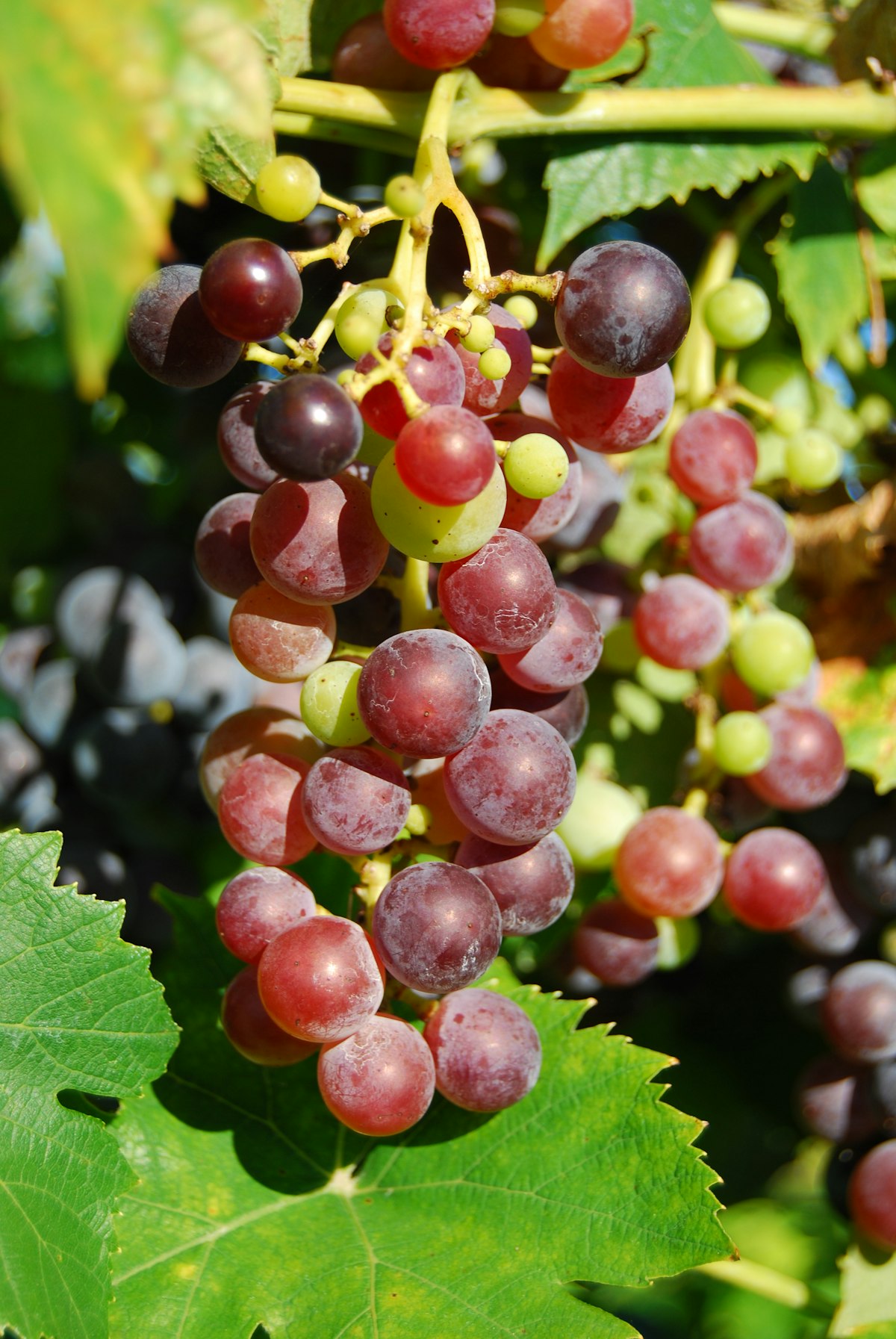
In 1963, a Sonoma County farmer named Robert Young pulled out a prune orchard and planted 6,500 Cabernet Sauvignon vines on 14 acres instead — the first Cabernet ever planted in what’s now Alexander Valley. Six decades later, Cabernet Sauvignon is California’s most planted and most valuable wine grape, and the valley Young started is a big reason Sonoma County gets mentioned in the same breath as Napa when people talk about California Cabernet.
What “California Wine Cabernet” Actually Means
There’s only one Cabernet Sauvignon. But “Cabernet” gets used loosely as an umbrella term for a small cluster of related grapes — some of which genuinely grow in Sonoma County, and some of which never will.
The scale is real, too. In the most recent county-specific breakdown available, Sonoma County growers brought in more than 41,000 tons of Cabernet Sauvignon in the 2022 harvest at an average price near $2,850 a ton — the single largest red-grape tonnage in the county that year, ahead of even Pinot Noir. Statewide, Cabernet Sauvignon has held the top or near-top spot for both volume and price of any wine grape California grows in every recent Grape Crush Report. When people say “California wine Cabernet,” they’re describing the backbone of the state’s red wine economy, not a niche pour.
Cabernet Sauvignon itself isn’t some ancient, storied variety. It’s a French accident, probably from the 1600s or 1700s. DNA testing at UC Davis in 1997 confirmed it’s a natural cross of Cabernet Franc and Sauvignon Blanc, discovered almost by chance while researchers were building a genetic database of California’s most-planted grapes. That means Cabernet Franc isn’t a cousin of Cabernet Sauvignon — it’s a parent.
Meet the Cabernet Family
Cabernet Franc: The Parent, and It’s Grown Right Here
Cabernet Franc buds and ripens about a week earlier than its offspring, which lets it handle slightly cooler sites than Cabernet Sauvignon can tolerate. In Bordeaux it’s grown partly as insurance against a harvest gone wrong. In Sonoma County, it does real work of its own: it’s one of the named varietals of the Moon Mountain District AVA, it shows up in the Bordeaux-varietal mix that makes Knights Valley the county’s warmest appellation, and growers like Robert Young Estate Vineyards farm it alongside Cabernet Sauvignon, Malbec, and Petit Verdot for blending. You won’t often see a Sonoma Cabernet Franc bottled on its own — it’s mostly a blending grape here, same as almost everywhere outside the Loire Valley — but it’s a real, working part of the county’s Cabernet story, not a footnote.
Cabernet Doré: Not Here, and Probably Never
Cabernet Doré sounds like it belongs on this list, and it does share half its parentage with Cabernet Sauvignon. But it’s a white wine grape, bred in 2001 by crossing Cabernet Sauvignon with the cold-hardy native American variety Norton, specifically to survive punishing Midwestern winters. It’s grown in states like Missouri, Illinois, and Kentucky, where surviving a hard freeze matters more than anything else. Sonoma County’s mild Mediterranean climate has no use for that trait, and there’s no record of Cabernet Doré being planted commercially anywhere in California. If you ever see it on a wine list, you’re looking at a Midwestern producer — not a Sonoma one.
Petit Cabernet: A Name, Not a Grape
This one’s simpler than it sounds, and a little different from how it’s sometimes described. “Petit Cabernet” isn’t a separate varietal or a small-berried mutation of Cabernet Franc — it’s one of roughly 60 historical synonyms for Cabernet Sauvignon itself, alongside old French names like Petit Bouschet and Vidure. Vineyard records used it interchangeably with Cabernet Sauvignon for centuries before DNA testing settled the grape’s parentage for good in the 1990s. So if you’re hunting for Petit Cabernet in Sonoma County, you’ve already found it. It’s just labeled Cabernet Sauvignon.
Where Sonoma Grows Its Best Cabernet
Sonoma County has 19 distinct AVAs, and serious Cabernet Sauvignon concentrates in a handful of the warmer ones.
Alexander Valley is the county’s largest AVA by planted acreage — about 15,000 acres, most of it Cabernet Sauvignon — and its warm days, cool nights, and gravelly alluvial soil (left behind by a wandering Russian River) come close to a textbook description of what the grape wants. Locals call it Cab Country without much irony.
Knights Valley, tucked against Mount St. Helena on the Napa border, is the warmest AVA in the county and leans hard into Bordeaux varietals — Cabernet Sauvignon and Cabernet Franc especially.
Moon Mountain District, a high-elevation AVA above the town of Sonoma, farms Cabernet Sauvignon on rocky, iron-rich volcanic soil between 400 and 2,200 feet. The altitude pushes vines to grow smaller, thicker-skinned berries, which is part of why mountain Cabernet tends to taste more structured and concentrated than fruit from the valley floor.
Pine Mountain-Cloverdale Peak, straddling the Sonoma-Mendocino line at up to 2,400 feet, has been planted mostly to Cabernet Sauvignon since the 19th century and produces vibrant, structured, fruit-driven wines from its mountain vineyards. Sonoma Mountain, a small AVA in the hills between the town of Sonoma and Santa Rosa, is one of the county’s better-known addresses for Cabernet outside the big three above, though it shares the neighborhood with Bennett Valley’s cooler-climate Merlot and Syrah. Both are smaller, less-visited alternatives to Alexander Valley for travelers who want mountain-grown Cabernet without the crowds.
Ready to build a Cabernet tasting day of your own? Browse Sonoma County wineries by AVA and find tasting rooms pouring Alexander Valley and Moon Mountain Cabernet right now.
Noteworthy Sonoma Cabernets to Look For
A handful of names come up again and again when people talk about serious Sonoma Cabernet.
Silver Oak’s Alexander Valley property farms about 75 acres of estate Cabernet around a modern, barn-style tasting room next to the winery’s landmark water tower — one of two Cabernets Silver Oak makes (the other comes from Napa), and the more approachable of the pair.
Jordan Vineyard & Winery makes exactly two wines, full stop: a Cabernet Sauvignon and a Chardonnay. The restraint is the point. Jordan’s Cabernet is built to age but drinks well on release, in a style wine writers have sometimes described as Burgundian thinking applied to a Bordeaux grape.
Robert Young Estate Winery farms the same ground Robert Young first planted in 1963, and still grows Cabernet Sauvignon alongside Cabernet Franc, Malbec, and Petit Verdot for its Bordeaux-style blends.
Up in Moon Mountain District, Kamen Estate Wines, B Wise Vineyards, and Ty Caton Vineyards all farm mountain Cabernet worth seeking out if you want to taste what elevation does to the grape.
Planning a Cabernet-Focused Visit
Harvest for Cabernet Sauvignon runs late — typically late September into October, well after Sonoma’s cool-climate Pinot Noir and Chardonnay come in, since the grape needs the extra hang time to fully ripen its thick skins and tannins. That makes early fall the best window to combine tasting with an actual look at the vines doing their work.
Cabernet also happens to be one of the more forgiving wines to plan a meal around: grilled steak, lamb, and aged hard cheeses all hold up to its tannin, and plenty of Sonoma producers pour exactly those pairings in their tasting rooms during harvest season. Stylistically, Sonoma’s Cabernet tends to run a touch riper and more fruit-forward than the more overtly savory, structured style Napa is known for — a difference growers and winemakers usually credit to Alexander Valley’s alluvial gravel soils versus Napa’s more varied volcanic and sedimentary benchland. Neither is “better”; they’re just different answers to the same grape, which is part of why it’s worth tasting both.
If you’re building a full weekend around it rather than a single stop, our guide to planning a Sonoma wine weekend covers how to pace two days of tasting without burning out your palate by the second afternoon — useful whether Cabernet is the whole trip or just one stop on it.
Want more deep dives like this one? Sign up for our newsletter and we’ll send new Sonoma wine guides straight to your inbox.
FAQs
What is California Cabernet wine?
“California Cabernet” almost always means Cabernet Sauvignon, California’s most-planted and most valuable wine grape by both tonnage and price per ton. It thrives in warm, well-drained sites across the state, and Sonoma County’s Alexander Valley, Knights Valley, and Moon Mountain District are among its most respected addresses outside Napa.
Is Cabernet Franc the same grape as Cabernet Sauvignon?
No — Cabernet Franc is the parent, not a version, of Cabernet Sauvignon. DNA testing in 1997 confirmed Cabernet Sauvignon is a natural cross of Cabernet Franc and Sauvignon Blanc. Cabernet Franc buds earlier, handles cooler sites, and is grown in Sonoma mainly as a blending grape in Moon Mountain District and Knights Valley.
Is Cabernet Doré grown in California?
Not commercially. Cabernet Doré is a white wine grape bred in 2001 from Cabernet Sauvignon and the cold-hardy Norton grape, specifically for harsh Midwestern winters. It’s grown in states like Missouri and Kentucky. Sonoma County’s mild climate has no need for that trait, and no commercial California plantings are documented.
What is Petit Cabernet?
Petit Cabernet isn’t a distinct grape — it’s one of roughly 60 historical synonyms for Cabernet Sauvignon, used in old French vineyard records alongside names like Petit Bouschet and Vidure. Any Sonoma County Cabernet Sauvignon you taste today is, technically, a Petit Cabernet under that older name.
Where is the best Cabernet Sauvignon grown in Sonoma County?
Alexander Valley, Sonoma County’s largest AVA at roughly 15,000 planted acres, is the benchmark address for Cabernet Sauvignon. Knights Valley and the high-elevation Moon Mountain District are the other two AVAs growers and critics point to most often for serious, age-worthy Sonoma Cabernet.