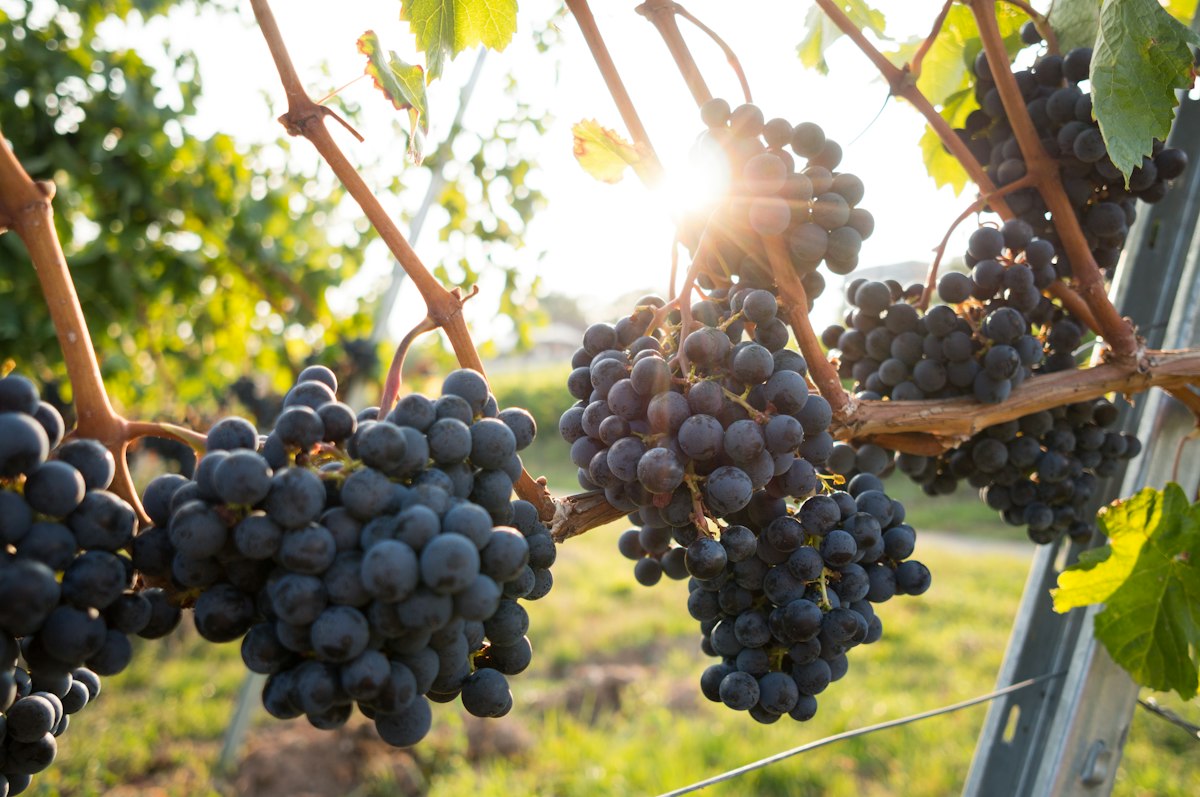
Sonoma County has 454 bearing acres of Malbec, according to the 2024 Sonoma County Crop Report — a rounding error next to Cabernet Sauvignon’s 12,373 acres, or even Merlot’s 3,761. And yet a small handful of wineries keep insisting on bottling it alone, unblended, as the main event rather than the supporting actor it plays almost everywhere else in the county.
A Grape That Usually Works in the Background
Most Sonoma vineyard blocks that grow Malbec were never planted to become “Malbec vineyards” in the marketing sense. They were planted to give a Cabernet Sauvignon program a little more color, a little more juiciness, a little more acid at the blending table — the same job Malbec has quietly done in Bordeaux blends for centuries. That’s why there’s more Cabernet-adjacent acreage in this county than most people realize, and comparatively so little of it standing on its own.
The scarcity cuts the other way financially, though. In the 2024 crop year, Sonoma County Malbec averaged roughly $3,000 a ton — more than either Cabernet Sauvignon ($2,920/ton) or Merlot ($2,202/ton) fetched that same year. There’s more Malbec in the ground here than Petit Verdot, Grenache, Carignane, or Sangiovese, but growers can charge a premium for it precisely because so few wineries need enough to build an entire release around.
From Cahors’s “Black Wine” to Mendoza’s Desert
Malbec’s home is Cahors, in southwest France, where it’s still known locally as Côt or Auxerrois and where French wine law requires it to make up at least 70% of anything labeled Cahors. King Henry III reportedly called it “the black wine” for its nearly opaque color — an early, unglamorous nickname for a grape that would eventually become internationally famous under a different flag entirely.
A brutal 1956 frost killed off roughly three-quarters of France’s Malbec vines, and Bordeaux mostly moved on to other grapes. Cahors rebuilt and stayed loyal. Meanwhile, a French agronomist named Michel Pouget had already carried Malbec cuttings to Mendoza, Argentina, in 1868 to help establish the region’s first agricultural college. The grape took to Mendoza’s high-altitude, sun-drenched, bone-dry climate so completely that Argentina now accounts for roughly three-quarters of all the Malbec planted on Earth — softer and less tannic than its French ancestor, and built around fruit intensity rather than structure.
California grows a genuinely different wine from the same grape. A comparative study by the Catena Institute of Wine and UC Davis, examining vineyards across both California and Mendoza, found real, measurable differences in the phenolic composition — and by extension the flavor — of Malbec grown in the two places. Sonoma’s version isn’t a cheaper stand-in for Mendoza’s; it’s its own thing, shaped by a cooler, more marginal climate than either of Malbec’s two famous homes.
Where Sonoma’s Malbec Vineyards Actually Grow
Almost all of the Malbec worth seeking out in Sonoma County comes from two places: Dry Creek Valley and Sonoma Valley.
Dry Creek Valley does most of the heavy lifting. Its benchland sites — gravelly, well-drained soils on the valley’s eastern edge near Healdsburg — give Malbec exactly what a thick-skinned, late-ripening grape wants: consistent daytime heat to fully ripen its tannins, followed by cool nights that hold onto acidity so the wine doesn’t turn flabby. The Timber Crest Farms area west of town, and the Magnolia Ranch vineyard specifically, are two of the more established Malbec sources in this pocket of the valley.
Sonoma Valley contributes the rest, usually from estate vineyards tucked against the Mayacamas foothills around Kenwood and Glen Ellen, where warm afternoons and the valley’s own diurnal swing produce a slightly different expression — a touch more floral, a touch less brooding than the Dry Creek fruit.
If you’re building a day around this grape specifically, that’s the geography to follow: start in Dry Creek, finish in Sonoma Valley, and you’ll have tasted both sides of what Sonoma Malbec can be.
Browse the full winery directory to see which tasting rooms in these two valleys are pouring Malbec this week — availability shifts with the vintage, so it’s worth checking before you build an itinerary around any single bottling.
Three Sonoma Wineries Actually Pouring Malbec
Chateau St. Jean (Kenwood, Sonoma Valley) has been making wine in Sonoma County since 1973, out of a 1920s chateau estate that’s as close as this county gets to a genuine European garden estate. It’s also the county’s most serious Malbec producer, full stop — the lineup includes a Sonoma County Malbec built mostly from Magnolia Ranch fruit in Dry Creek Valley with a splash of estate Sonoma Valley Malbec and a little Merlot for texture, a single-vineyard St. Jean Estate Vineyard Malbec sourced entirely from the home ranch, and a Reserve tier above both. If you want to taste the range a single county can produce from one grape, this is the one stop that shows it.
Kokomo Winery (Dry Creek Road, Healdsburg) is a small-lot, single-vineyard specialist tucked into the Timber Crest Farms winery cluster west of town. Winemaker Erik Miller founded it in 2004 alongside Randy Peters, a fourth-generation Dry Creek Valley grower who farms most of the fruit Kokomo bottles. Malbec is one of more than a dozen varietals in a lineup built almost entirely around site-specific, small-production wines — the kind of place where a Malbec pour is one option among many rather than a headline act, which is arguably the most honest way to encounter this grape in Sonoma.
Imagery Estate Winery (Sonoma Highway 12, Glen Ellen) exists specifically for grapes like this one. Founded in 1985 by Joe Benziger and now led by his daughter, second-generation winemaker Jamie Benziger, Imagery has spent four decades deliberately chasing varietals that get lost inside bigger blends — Malbec, Tempranillo, Lagrein, Mourvèdre — and giving each one its own small-lot bottling. Every release also gets a newly commissioned piece of original art for its label, and the tasting room doubles as a working gallery, so a Malbec tasting here comes with an actual art collection to wander between pours.
Building a Day Around These Three
Chateau St. Jean and Imagery Estate Winery sit about 20 minutes apart in Sonoma Valley, both an easy loop through Kenwood and Glen Ellen — a manageable morning-into-afternoon pairing without much driving in between. Kokomo Winery, out on Dry Creek Road in Healdsburg, is a different valley entirely, roughly 45 minutes north, and works better as its own outing than as a third stop tacked onto the same day.
If you’re already staying near Healdsburg for the Dry Creek side of this trip, Jordan Winery in neighboring Alexander Valley makes a natural companion visit — it’s built around Cabernet Sauvignon rather than Malbec, but the same château-style, Bordeaux-inspired sensibility runs through both, and the two Bordeaux grapes make an interesting side-by-side. For the broader question of how many wineries to actually attempt in one day without burning out by 3pm, our guide to pacing a Sonoma wine weekend covers the two-winery-per-morning rule that applies just as well to a Malbec-focused trip as any other.
What Sonoma Malbec Tastes Like — And How It Differs From Argentina’s
Sonoma Malbec tends to show dark, saturated fruit — blueberry, boysenberry, ripe plum — layered with violet, white pepper, and a streak of something mineral, sometimes described as graphite or wet stone, running underneath. The tannins are present but plush rather than gripping, and the finish tends to be softer than a Cabernet Sauvignon from the same address, which is part of why winemakers reach for it as a blending partner in the first place.
Set that next to a Mendoza Malbec and the differences show up fast. Argentina’s high-altitude vineyards produce a fruitier, more overtly generous style with softer tannins still — built for immediate pleasure at altitude and intense sun. Sonoma’s cooler nights and shorter growing window pull the wine toward more structure and a firmer spine, closer in spirit to the grape’s original Cahors character than to its adopted Argentine one, without fully replicating either. It’s a genuinely different glass, not a regional variation on the same theme.
That structure also makes it a natural partner for grilled or roasted red meat — lamb, a well-marbled steak, anything with real char on it — and for dark chocolate desserts that can stand up to its fruit without being overwhelmed.
Malbec doesn’t photograph well for a newsletter the way a rosé release does, but that’s exactly why it’s worth following. Sign up for the newsletter and we’ll flag it when a new Sonoma Malbec vintage lands, or when a winery adds one to its tasting flight — the kind of small-production news that’s easy to miss if you’re not looking for it.
Frequently Asked Questions
What is Malbec wine?
Malbec is a dark-skinned red grape originally from Cahors in southwest France, now grown mainly in Argentina and, in smaller quantities, in California. It produces deeply colored, full-bodied red wines with flavors of blueberry, plum, and blackberry, moderate-to-soft tannins, and good acidity. In Bordeaux, it’s traditionally used as a blending grape rather than a standalone varietal.
Is Malbec a dry wine?
Yes. Malbec is fermented dry, meaning virtually all of the grape’s natural sugar converts to alcohol during fermentation, leaving little to no residual sweetness. Its ripe, jammy fruit character can read as “sweet” on the nose or palate, but that’s fruit intensity, not sugar — the wine itself is dry by any technical measurement.
Where can I taste Malbec in Sonoma County?
Sonoma’s Malbec plantings are concentrated in Dry Creek Valley and Sonoma Valley. Chateau St. Jean in Kenwood pours the county’s widest Malbec lineup, Kokomo Winery on Dry Creek Road offers it as part of a broader single-vineyard portfolio, and Imagery Estate Winery in Glen Ellen features it among its rotating rare-varietal releases.
What does Sonoma County Malbec taste like?
Expect dark fruit — blueberry, boysenberry, ripe plum — with floral violet notes, white pepper spice, and a mineral, sometimes graphite-like edge. The tannins are soft and plush rather than firm, and the body is full without the heaviness of a Cabernet Sauvignon from the same vineyard.
How is Sonoma Malbec different from Argentine Malbec?
Argentina’s high-altitude Mendoza vineyards produce a fruitier, softer, more immediately generous style of Malbec. Sonoma’s cooler nights and shorter growing season push the wine toward firmer structure and more restraint, landing closer to the grape’s original Cahors character than to its adopted Argentine one — a genuinely different expression of the same grape rather than a lighter copy.