On the morning of July 16, 2026, a crew at Dutton Ranch’s Jewell Vineyard in Graton cut Pinot Noir off the vine — the earliest start to a Sonoma County grape harvest in at least four decades. Steve Dutton, who co-owns Dutton-Goldfield Winery, gave a short assessment of the fruit: “The clusters are small, but the quality is excellent.”
That single pick tells you most of what you need to know about planning a harvest trip. Harvest is not a date on a calendar. It’s a weather-dependent window that moves by weeks from one year to the next, and 2026 has moved it further than usual.
Here’s how the months actually work — and how to pick yours.
The short answer
In a typical year, Sonoma County harvest runs mid-August through late October, with stragglers into early November. Sparkling wine grapes come off first, whites and Pinot Noir follow, and the late-ripening reds finish the season.
2026 is not a typical year. A record March heat wave triggered early bud break across the North Coast, and fruit has been running roughly two to three weeks ahead of a normal season. Cool, wet weather during bloom then cut into yields — some growers are looking at a fraction of their usual tonnage. One organic vineyard in the Petaluma Gap that normally brings in about three tons per acre expects less than half a ton this year.
For a visitor, the practical translation is this: if you want to see harvest in 2026, come earlier than you would have last year. The window that usually opens in mid-August opened in mid-July, and it will likely close earlier too.
August: the season opens
August is when the crush pads wake up. Grapes destined for sparkling wine get picked first, because sparkling base wine wants high acid and low sugar — you pick before the fruit gets ripe by table-wine standards. Sauvignon Blanc and early Chardonnay blocks follow.
Most picking happens at night. Crews start somewhere between midnight and 3 a.m., under work lights, because cold fruit arrives at the winery in better shape and ferments more predictably. If you’re driving through Russian River Valley or Carneros before dawn in August, you’ll see the lights and the gondola trucks. By 10 a.m., the vineyard is empty and quiet again.
What August feels like as a visitor: hot afternoons, long light, a county that is busy but not yet frantic. Tasting rooms are fully staffed for summer. This is the easiest month of the season to get a reservation, and the last month before the fall rush.
September: the county shifts into second gear
September is the heart of it. Chardonnay and Pinot Noir come in across Russian River Valley and the Sonoma Coast — estates like Balletto Vineyards south of Santa Rosa are working through both — and by mid-month the reds start arriving. Fermentation is running in nearly every cellar in the county, which means the air near a working winery smells like bread, yeast, and crushed fruit — a smell you cannot get any other time of year.
Something to understand about September: the people who make the wine are working eighteen-hour days. A winemaker-hosted tasting that runs beautifully in April may be handed to the hospitality team in September, or trimmed, or paused entirely. That isn’t a downgrade so much as a fact of the calendar. Ask when you book.
What September feels like as a visitor: peak activity, warm days, cooling nights. Crush pad tours — where they’re offered — are at their best. Weekends fill first, so aim for Tuesday through Thursday if your schedule allows.
October: reds, color, and the finish line
October brings the late-ripening reds. Zinfandel out of Dry Creek Valley — Pedroncelli Winery has been picking the same Geyserville ground since the 1920s — then Merlot, and finally Cabernet Sauvignon from the warmer inland sites in Alexander Valley, where hillside estates like Stonestreet are usually the last significant fruit to come off in the county.
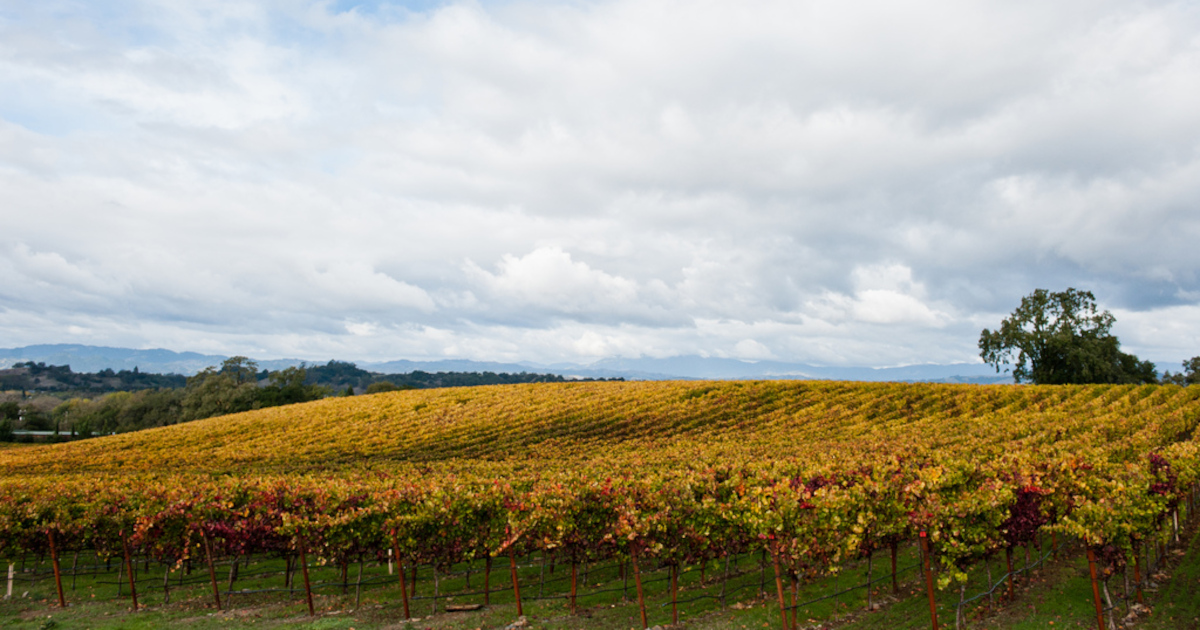
October is also when the vineyards themselves turn. Leaves shift to gold, amber, and — on Cabernet and Zinfandel blocks especially — deep red. If your priority is what the landscape looks like rather than what the crush pad sounds like, mid-to-late October is your month in a normal year. In 2026’s compressed season, expect that color to arrive earlier than usual.
The other thing October brings is weather anxiety. Growers are racing the first serious rain, which can dilute fruit still hanging on the vine and raise rot pressure. That urgency is part of what makes October visits interesting — and part of why flexibility helps.
What October feels like as a visitor: the most photogenic month, the busiest weekends, and the highest concentration of harvest-themed events. Book six to eight weeks out for anything you care about.
Early November: the tail
By early November most of the fruit is in. What’s left is cellar work — pressing, barrel-down, fermentations finishing quietly. The vineyards are still colored up, tasting rooms are noticeably calmer, and lead times for reservations drop sharply.
If you want fall wine country without harvest crowds, the first two weeks of November are underrated. You’ve missed the picking, but you’ve caught the light, the color, and the exhale.
Find tasting rooms open during harvest
Filter Sonoma County tasting rooms by AVA, reservation policy, tasting fee, and what’s open today.
Browse wineries →What actually changes for visitors during harvest
Harvest season gets romanticized. It deserves some of that, but not all of it. The honest tradeoffs:
What you gain
- Fermentation aromas in and around the cellar — the single most distinctive sensory difference of the season.
- The chance to taste juice or fermenting must at wineries that offer it, which is a genuinely different experience from tasting finished wine.
- Vineyard activity: crews, gondolas, sorting tables, the sound of a destemmer running.
- Fall color from late September onward, earlier in a compressed year like this one.
What you give up
- Access. Cellars are working spaces during harvest, and some winery tours shorten or close entirely for safety and logistics.
- Winemaker time. If meeting the winemaker matters to you, spring is a better bet than October.
- Easy booking. Reservations tighten from September on, and the marquee experiences sell out.
- Road patience. Vineyard equipment shares two-lane roads with your rental car. Build in extra drive time.
None of that should talk you out of a harvest trip. It should shape which weeks you pick and how far ahead you book.
Matching the month to what you want
- You want to see picking and crush — mid-August through September in 2026, given the early start. Ask specifically whether the winery has fruit coming in the week of your visit; most tasting rooms will tell you.
- You want fall color and photographs — late September through October.
- You want winemaker access and unhurried conversation — not harvest. Come in spring, or wait for the second half of November.
- You want events and a festival atmosphere — October, without question.
- You want the season’s look with none of the crowd — the first two weeks of November.
Not sure which weekend to pick?
Tell the Wine Concierge what you like to drink and how you like to taste, then build the days out stop by stop.
Try the Wine Concierge →Create a custom itinerary →Harvest-season events to plan around
Three anchors on the 2026 fall calendar, all of which reward early booking:
- Sonoma County Harvest Fair — October 10–11 at the Sonoma County Fairgrounds in Santa Rosa. The Saturday evening event, Taste, Toast & Celebrate, runs 6 to 9 p.m. in the Grace Pavilion and pours medal winners from the county’s professional wine competition alongside bites from local restaurants. Tickets went on sale July 1.
- Grape Camp — October 4–7, run by Sonoma County Winegrowers. Three days of picking, blending, and grower dinners. Worth knowing as a planning benchmark: the 2026 session is already sold out, with a waitlist. That’s what demand for hands-on harvest access looks like.
- Wine & Food Affair — November 7–8 along the Wine Road, 11 a.m. to 4 p.m. each day across Alexander Valley, Dry Creek Valley, and Russian River Valley. Ticket sales open September 1, and the event has a history of selling out.
Dates and ticketing change. Confirm with the organizer before you book flights, and check what’s on during your dates closer to the trip.
Booking lead times that hold up
Rough guidance, adjusted for a harvest year:
- August: two to three weeks for most tasting rooms; longer for appointment-only estates.
- September: three to five weeks. Weekends go first.
- October: six to eight weeks, and longer for anything tied to an event weekend. Lodging in Healdsburg and the town of Sonoma tightens before tasting rooms do.
- Early November: one to two weeks is usually enough.
Two habits that make a harvest trip work regardless of month. First, plan fewer stops than you think you can handle — two tasting rooms before lunch is the structure that survives contact with reality, and we’ve made the full case for it here. Second, when you call to reserve, ask directly: are you receiving fruit that week, and does anything about the visit change if you are? The answer tells you whether you’re getting a harvest experience or a very good tasting during harvest season. Both are worth having. They’re not the same thing.
Frequently asked questions
What months is harvest season in Sonoma?
Sonoma County harvest typically runs from mid-August through late October, occasionally extending into early November. Sparkling wine grapes are picked first in August, white varieties and Pinot Noir follow through September, and late-ripening reds like Cabernet Sauvignon finish in October. The exact timing shifts by two to three weeks in either direction depending on the growing season.
When did the 2026 Sonoma harvest start?
The 2026 harvest began on July 16 in the Russian River Valley, with a Pinot Noir pick at Dutton Ranch — the earliest recorded start in Sonoma County in at least 40 years. A record heat wave in March triggered early bud break, pushing the entire season roughly two to three weeks ahead of normal. Yields are also expected to be significantly lighter than average.
Is harvest a good time to visit Sonoma wine country?
Yes, with tradeoffs. You get fermentation aromas, vineyard activity, the chance to taste juice or fermenting wine, and fall color. You also face tighter reservations, reduced cellar access at some wineries, and winemakers who are working around the clock. Visitors who want relaxed, in-depth conversation with the people making the wine are usually better served by a spring visit.
Can visitors participate in the grape harvest?
Some wineries offer harvest experiences that include picking, sorting, or grape stomping, though these are limited and typically sell out well in advance. The most immersive option is Grape Camp, a multi-day program run by Sonoma County Winegrowers — the 2026 session sold out ahead of its October dates. For most visitors, the realistic version is a crush pad tour or a tasting at a winery actively receiving fruit.
What’s the best month for fall color in Sonoma?
Mid-to-late October in a typical year, when vineyard leaves turn gold and red before dropping. In an early season like 2026, expect that color to arrive one to two weeks sooner. The first half of November often still has strong color with noticeably fewer visitors.
Planning a fall trip? Sign up for our newsletter for seasonal guides and Sonoma tasting room news, or browse our gifts for wine lovers if you’re shopping ahead of the holidays.