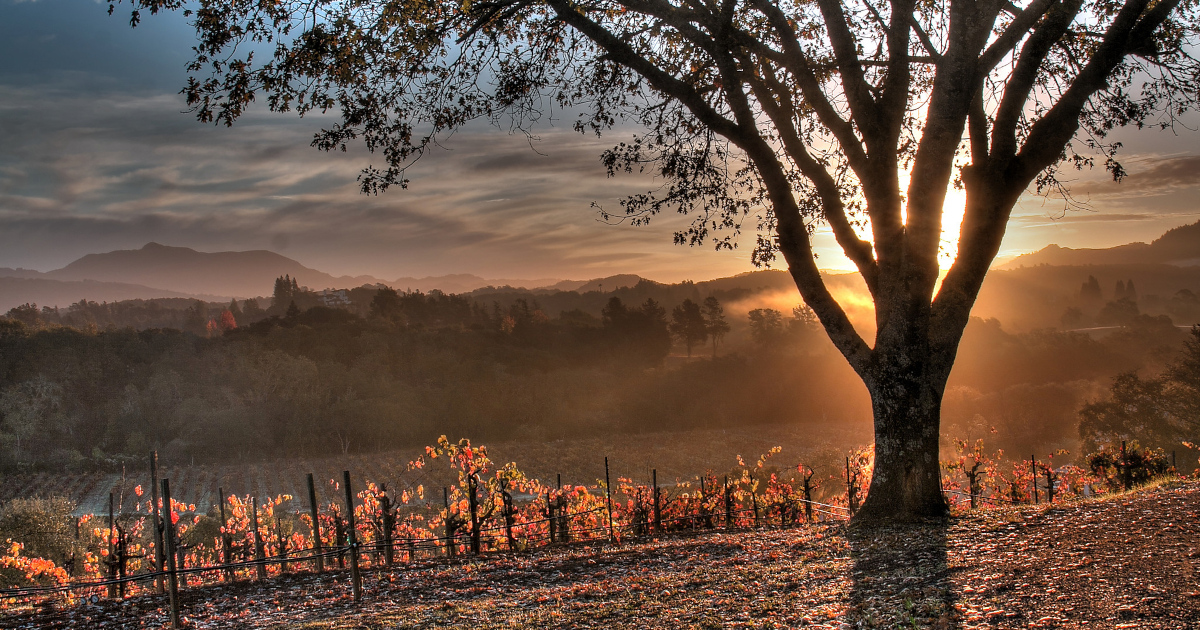
Sonoma’s postcards are almost always shot in July. Green rows, blue sky, somebody laughing over a glass of rosé on a patio. It’s a nice picture, and it’s also the month locals quietly try to avoid.
Ask anyone who’s spent a few harvests here — the tasting room staff, the vineyard crews, the winemakers watching the forecast like it’s a stock ticker — and you’ll get the same answer about when Sonoma is actually at its best: fall. Sonoma wine country fall weather is the reason. The days are still warm enough for a patio lunch, the nights have finally cooled off, the vines are turning gold and rust at the edges, and the whole county smells faintly of fermenting grapes. It’s the one stretch of the year when the weather and the wine calendar are working on exactly the same schedule.
If you’re trying to decide when to book your trip, here’s what the season actually looks like, month by month, and how to plan around it.
What “Fall Weather” Actually Means in Sonoma Wine Country
Sonoma has a Mediterranean climate, which is a fancy way of saying the seasons don’t announce themselves the way they do elsewhere. There’s no single day where summer ends and fall begins. Instead, the transition is gradual: the dry stretch that runs from roughly May through September slowly gives way to the county’s first real rain, which typically doesn’t show up until sometime in October or November.
That slow fade is exactly what makes fall work so well for a wine country trip. You get the tail end of summer’s reliably dry, sunny days without the crush-hour heat of August, and you get it while the vineyards themselves are doing the most interesting work of their entire year. The grapes are ripening, the crews are picking, and the wineries are busier — and more alive — than at almost any other point on the calendar.
Here’s how that plays out across the three core fall months.
September: Still Summer, With Harvest Already Underway
September is the warmest month of the year in Sonoma, with afternoon highs regularly landing in the mid-to-upper 80s°F and nights settling into the comfortable 50s. It doesn’t feel like fall yet — sunscreen is still non-negotiable, and a midday tasting on an unshaded patio can run warm.
What does feel like fall is the pace inside the winery. Grapes destined for sparkling wine and some of the earlier-ripening Chardonnay and Pinot Noir blocks, especially in cooler pockets like the Russian River Valley and Sonoma Coast, are often already coming off the vine by early-to-mid September. If you visit now, there’s a real chance you’ll pull into a tasting room and find a crew out in the rows at 6 a.m. picking ahead of the day’s heat.
The trade-off: September crowds still behave like summer crowds. Weekends book up, and popular tasting rooms want a reservation. If you want harvest energy without the July-level traffic, September is a decent compromise — just plan ahead.
October: The Sweet Spot
If you ask a dozen Sonoma locals which month they’d pick for a visit, a good number will say October without hesitating. Daytime highs ease down into the mid-to-upper 70s°F, nights drop into the low-to-mid 50s, and the light turns that specific late-afternoon gold that makes every vineyard photo look like it was professionally staged.
This is also peak harvest for many of Sonoma’s signature red varietals — Zinfandel, Cabernet Sauvignon, Sangiovese — particularly in warmer inland AVAs like Dry Creek Valley and Alexander Valley. Crush pads at Dry Creek estates like Wilson Winery are running, cellars smell like fermenting fruit, and vine canopies are starting to turn color at the edges, giving the county a subtler, more California version of a fall foliage display.
Rain is still unusual in October, though not impossible — the first light system of the season occasionally arrives in the last week or two of the month. It’s rarely more than a passing day, and it doesn’t derail a trip so much as remind you why locals keep a light jacket in the car from here on out.
November: Quieter, Cooler, and Still Worth the Trip
By November, the character of the season shifts again. Highs settle into the mid-60s°F, nights drop into the 40s, and the county typically sees its first real storm systems of the wet season. Harvest is winding down for most producers — by mid-to-late November, the picking is largely finished and the action has moved indoors, into fermentation tanks and barrel rooms.
That shift indoors is actually good news for visitors. November tends to bring noticeably lighter crowds, easier reservations, and a cozier version of the tasting room experience — some wineries lean into it with barrel tastings, library pours, or seated tastings in the caves, like the ones at Deerfield Ranch Winery in Kenwood, that don’t make the same sense in July. If your priority is a relaxed, uncrowded visit and you don’t mind packing a rain layer just in case, November is one of the most underrated months to come.
Ready to see who’s pouring this fall? Browse Sonoma County wineries by open hours, tasting fees, and reservation policy →
One County, Several Microclimates
Ask “what’s the weather like in Sonoma this fall?” and the honest answer is: it depends which Sonoma you mean. The county spans nearly 20 distinct AVAs, and the temperature swing between them on any given fall day can be significant.
The Russian River Valley and Sonoma Coast sit closest to the ocean and pull in a marine layer most mornings — fog that typically burns off by late morning but keeps these AVAs noticeably cooler overall. That’s part of why they’re known for Pinot Noir and Chardonnay; the grapes ripen slowly under those conditions. If you’re visiting in fall and want a crisper morning and a milder afternoon, this is where to look — Moshin Vineyards sits on Westside Road right in that fog corridor.
Head inland to Alexander Valley or Dry Creek Valley, and the fog burns off earlier or doesn’t reach at all. These warmer pockets run several degrees hotter on an average fall afternoon, which is exactly why they’re Sonoma’s Zinfandel and Cabernet Sauvignon strongholds — the extra heat helps those thicker-skinned red varietals fully ripen.
None of this should change whether you visit in fall — it should just inform where you spend your day. A Russian River Valley morning followed by an Alexander Valley afternoon at somewhere like Soda Rock Winery isn’t a bad way to experience both ends of what Sonoma’s fall weather actually offers.
Why the Weather Drives the Harvest Calendar
It’s worth understanding why fall weather and harvest are so tightly linked, because it’s the reason the season feels the way it does on the ground.
Winemakers don’t pick grapes on a fixed date — they pick based on sugar and acid levels, which shift with the weather day to day. A run of hot afternoons can push sugars up fast, while an early rain can dilute flavor or invite rot if grapes sit too long afterward. That means through September and October, winemaking teams are checking forecasts as closely as any farmer would, sometimes moving up a pick by a day or two to beat an incoming heat spike, or racing to get a block in before a predicted storm.
For visitors, that urgency is part of the appeal. Fall is the one season where a Sonoma winery visit might mean stepping around bins of freshly picked fruit, catching the smell of active fermentation drifting out of an open cellar door, or watching a crush pad in motion instead of just touring an empty one. It’s wine country doing the thing it exists to do, in real time.
What to Wear (and Pack) for a Fall Wine Country Visit
Sonoma’s fall weather rewards dressing in layers more than any other season, since a single day can swing 25–30 degrees from morning to afternoon. A few practical notes:
- Layer, layer, layer. Mornings can start cool and foggy, especially near the coast or in low-lying valleys, then warm up considerably by early afternoon.
- Bring closed-toe shoes if any part of your itinerary includes a vineyard or cellar walk — flip-flops and gravel rows don’t mix.
- Pack a light jacket or shawl, particularly for October and November evenings, when temperatures drop faster than the daytime warmth suggests.
- Don’t skip the sunscreen. Midday sun is still strong through September and much of October, even once the air has cooled off.
- Add a light rain layer for November trips — not because you’ll need it often, but because the season’s first storms can arrive with little warning.
Choosing Your Fall Window
There’s no single “correct” month — it depends on what you’re optimizing for.
- Want the most harvest activity and the best odds of catching a crush pad in motion? Lean toward late September through mid-October.
- Want the best balance of comfortable weather, dramatic light, and reasonable crowds? October is the consensus pick for a reason.
- Want lighter crowds, easier reservations, and a cozier tasting room experience — and don’t mind packing a rain jacket? November delivers all three.
If you’re still weighing fall against the rest of the year, it’s worth zooming out to the full calendar — we’ve broken down the best time of year to visit Sonoma wine country in a companion guide covering every season, not just this one.
Not sure where to start? Build a custom Sonoma wine country itinerary → tailored to the dates, AVAs, and pace you actually want.
Frequently Asked Questions
What is Sonoma wine country’s weather like in the fall?
Fall in Sonoma stays dry and mild through most of September and October, with daytime highs ranging from the mid-70s to mid-80s°F and cooler nights in the 50s. By November, temperatures ease into the 60s during the day and 40s at night, and the county’s first real rain of the season typically arrives.
What’s the best month to visit Sonoma for fall weather?
October is generally considered the best all-around month. Days are warm but not hot, nights are comfortably cool, harvest is in full swing for many red varietals, and rain is still uncommon.
Does it rain in Sonoma during harvest season?
Rain is rare through September and most of October, though a light system can occasionally arrive in late October. By November, the odds of rain rise noticeably as the county’s wet season begins in earnest.
What should I wear to Sonoma wineries in the fall?
Layers are the key move — mornings can be cool and foggy while afternoons warm up considerably. Closed-toe shoes are a good idea for any vineyard walk, and a light jacket earns its keep by evening, especially in October and November.
Is fall a good time to visit Sonoma without summer crowds?
September still runs close to summer crowd levels, but October and especially November see noticeably lighter traffic and easier reservations, while still offering comfortable weather and, in October’s case, peak harvest activity.
Fall doesn’t get the same marketing push as a summer weekend in wine country, but it’s the season that actually shows you what Sonoma is built around. Pick your window based on what you want — harvest energy, ideal weather, or a quiet, uncrowded visit — and you’ll land on a trip that’s hard to beat.