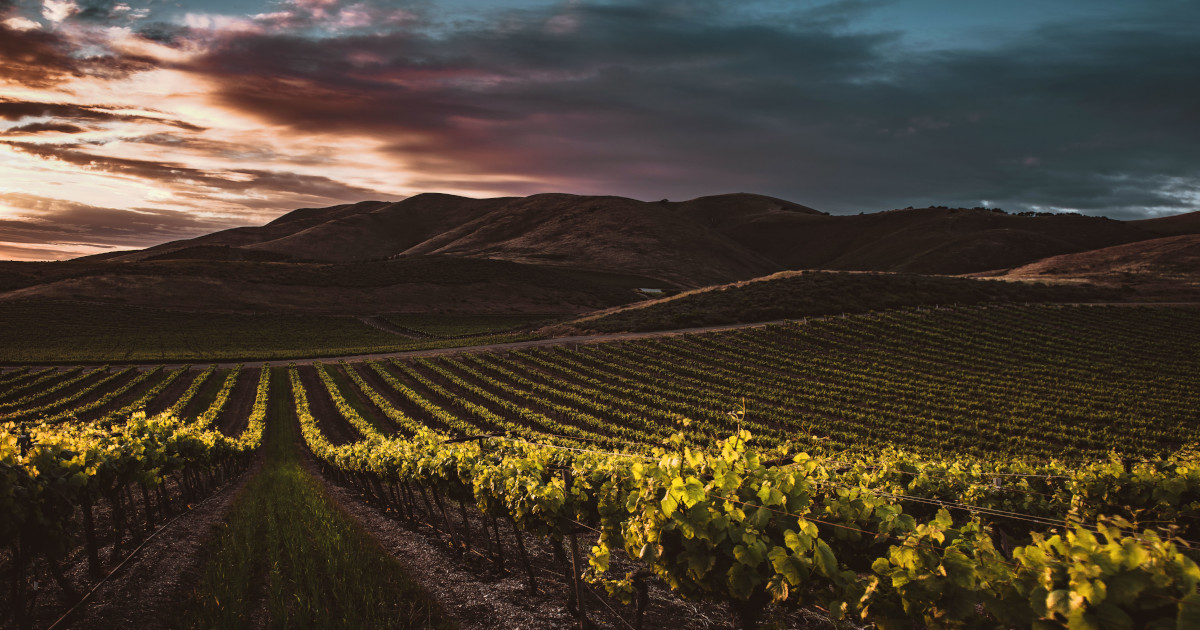
Most visitors arrive in Sonoma County with one question: where do I start?
The short answer is that Sonoma County has nineteen officially recognized wine-growing regions — called American Viticultural Areas, or AVAs — and they are not interchangeable. The Russian River Valley produces some of California’s finest Pinot Noir because Pacific fog rolls in through river gaps every afternoon and slows ripening to a crawl. Forty minutes north, the Alexander Valley bakes in warm inland heat that’s closer to Bordeaux than to Burgundy — the kind of heat that turns Cabernet Sauvignon into something dense and serious. Both are in Sonoma County. They taste nothing alike.
This guide is designed to help you understand what makes each AVA distinct, which grapes it does best, and where to taste if you go. It’s a navigation tool, not an encyclopedia. For deeper reading on any individual region, we’ll be publishing dedicated guides to each one.
How Sonoma’s AVAs Work
An AVA designation means the federal government has recognized that a specific area has a combination of geography, climate, and soil that produces wines with a distinct character. It’s about terroir — the French idea that where grapes grow shapes what they taste like.
Sonoma County’s 19 AVAs range from enormous umbrella appellations that contain other AVAs within them, to tightly drawn sub-appellations covering just a few thousand acres of vines. Some are familiar names you’ll see on restaurant wine lists. Others are known primarily to collectors who seek out specific vineyard designations.
A few things worth knowing upfront:
- AVA boundaries don’t match visitor geography. A winery can sit inside one AVA but source fruit from another. The AVA on the label tells you where the grapes were grown, not necessarily where the tasting room is.
- Overlapping AVAs are the rule, not the exception. Green Valley of Russian River Valley sits inside the Russian River Valley AVA, which itself overlaps the broader Sonoma Coast AVA. This isn’t confusion — it’s precision.
- Some AVAs have very few tasting rooms. Rockpile and Pine Mountain–Cloverdale Peak, for example, are primarily farming regions. If you want to taste wines from those grapes, you’ll find them poured at tasting rooms elsewhere — usually Healdsburg.
The Big Four: Where Most Visitors Go
These four AVAs produce the wines Sonoma County is best known for, have the highest concentration of tasting rooms, and are where a first-time visitor should anchor their itinerary.
Russian River Valley
Signature grapes: Pinot Noir, Chardonnay
The Russian River Valley is where Sonoma put itself on the world wine map. Fog from the Pacific funnels inland through a gap in the coastal mountains every afternoon, dropping temperatures by 20 degrees or more and giving the grapes a long, cool growing season that preserves acidity and builds complexity. The result — particularly in Pinot Noir — is wines of elegance and precision that stand alongside the best in the world.
The AVA sits roughly between Healdsburg and Sebastopol, covers around 15,000 planted acres, and contains over 90 wineries. Pinot Noir and Chardonnay dominate, though you’ll find excellent Zinfandel and Gewürztraminer from producers who enjoy working against the grain.
Start here:
- Williams Selyem Winery — allocation-list wines and appointment-only tastings; the benchmark for Russian River Pinot Noir since the 1980s
- Gary Farrell Vineyards & Winery — single-vineyard Pinot Noirs and Chardonnays with exceptional vineyard focus; hilltop tasting room with valley views
- Merry Edwards Winery — estate Sauvignon Blanc and some of the most consistently lauded Pinot Noirs in the appellation
Dry Creek Valley
Signature grapes: Zinfandel, Sauvignon Blanc
Dry Creek Valley is Sonoma’s most compact AVA — sixteen miles long, two miles wide — and its most single-minded. This is Zinfandel country. Old-vine blocks, some surviving from before Prohibition, produce bold, brambly, intensely flavored wines that have no precise equivalent elsewhere in California. If you’ve only ever thought of Zinfandel as a sweet pink drink, a proper Dry Creek Zin will reframe your understanding of the grape entirely.
The valley runs northwest of Healdsburg through mostly family-owned ranches and farms. There are no traffic lights inside the AVA. Sixty-plus wineries line Dry Creek Road and West Dry Creek Road in a corridor easy to navigate in a single day.
Start here:
- Ridge Vineyards Lytton Springs — the Zinfandel here is a California benchmark; the tasting room itself, built from straw bales and vineyard clay, is worth seeing
- A. Rafanelli Winery — four generations of the Rafanelli family growing grapes here since the early 1900s; limited-production Zinfandel and Cabernet you can only buy at the winery
- Dry Creek Vineyard — the first new winery established in the valley after Prohibition, recognized for nine distinct Zinfandel bottlings and a Loire-inspired Fumé Blanc
Alexander Valley
Signature grapes: Cabernet Sauvignon, Bordeaux blends, Chardonnay
Alexander Valley is Sonoma’s warmest appellation — a narrow corridor running from Healdsburg north to Cloverdale where the Russian River deposits gravel-rich alluvial soil ideal for growing Cabernet Sauvignon. The wines here tend toward accessibility over austere structure: dark fruit, a touch of chocolate, tannins that soften relatively early. This is not Napa Valley Cabernet, and that’s precisely the point.
The valley has 43 wineries and over 14,000 planted acres. Bordeaux varieties dominate, but the warmer sites produce old-vine Zinfandel worth seeking out, and Chardonnay from producers who farm the cooler western edges can be quietly excellent.
Start here:
- Jordan Vineyard & Winery — produces exactly two wines (a Cabernet and a Chardonnay) with a culinary program and estate tours that justify the advance planning required; perennially among the top-ordered restaurant Cabernets in the country
- Silver Oak Cellars — the Alexander Valley Cabernet is where the brand started in 1972; the Healdsburg tasting room lets you compare it side-by-side with the Napa Valley bottling
- Alexander Valley Vineyards — sits on the original homestead of Cyrus Alexander, for whom the valley is named; daily complimentary tastings and cave tours are a rarity at this quality level
Sonoma Valley
Signature grapes: Zinfandel, Cabernet Sauvignon, Chardonnay, Pinot Noir
Sonoma Valley is the oldest wine-growing region in Sonoma County — California’s commercial wine industry was born here in the 1850s — and the most varied. The valley runs southeast from Glen Ellen to the town of Sonoma, flanked by the Mayacamas Mountains to the east and the Sonoma Mountains to the west. Temperature and character shift dramatically from north to south: the cooler southern end near the town of Sonoma is Chardonnay and Pinot Noir territory; the warmer northern reaches around Glen Ellen favor old-vine Zinfandel and Cabernet Sauvignon.
The result is an AVA that resists easy summary. Sonoma Valley contains more distinct sub-appellations than any other Sonoma AVA, and the diversity of varieties grown here is unmatched in the county.
Start here:
- Buena Vista Winery — California’s oldest premium winery, established in 1857 by Hungarian immigrant Agoston Haraszthy; history and wine in equal measure
- Gundlach Bundschu Winery — the oldest family-owned winery in California, founded in 1858 and now in its sixth generation; known for Gewürztraminer, Pinot Noir, and a genuine commitment to sustainability
- Chateau St. Jean Winery — estate wines across a full spectrum of varieties, with grounds and gardens that reward a leisurely afternoon visit
The Cool-Climate Corridor: Fog, Wind, and the Coast
Sonoma Coast
Signature grapes: Pinot Noir, Chardonnay, Syrah
The Sonoma Coast AVA is the largest in Sonoma County and the most complex — a vast appellation stretching from the San Pablo Bay in the south to the Mendocino County line in the north. At its heart are the hillside vineyards of the Freestone area and the wind-battered ridges above the Pacific. Pinot Noir and Chardonnay from the true coastal sites have a structure and minerality that differs markedly from their Russian River Valley counterparts: leaner, more savory, built to age.
Worth visiting:
- Flowers Vineyards & Winery — among the most recognized names in West Sonoma Coast-style Pinot Noir and Chardonnay; the tasting experience matches the reputation
- Hirsch Vineyards — appointment-only estate tastings at a ridge-top farm above the fog line; serious wine for serious enthusiasts
- Sonoma Coast Vineyards — a more accessible entry into the appellation, pouring cool-climate Pinot Noir, Chardonnay, and Sauvignon Blanc without the appointment-only logistics
Green Valley of Russian River Valley
Signature grapes: Pinot Noir, Chardonnay (the coolest, foggiest sub-appellation in the county)
Green Valley is a sub-AVA nested within Russian River Valley — the smallest and most tightly defined, covering the Sebastopol and Forestville area where Goldridge sandy loam soil and persistent fog produce some of the most distinctive Pinot Noir in California. Wines from this appellation have a cool, almost austere character when young that opens dramatically with a few years in bottle.
Worth visiting:
- Iron Horse Vineyards — the definitive Sonoma sparkling wine producer; estate Brut and Blanc de Blancs poured in an open-air tasting area overlooking the vineyards
- Hartford Family Winery — single-vineyard Pinot Noirs and Zinfandels from the Forestville estate; one of the region’s most focused expressions of Green Valley terroir
Fort Ross-Seaview
Signature grapes: Pinot Noir, Chardonnay
Established in 2012, Fort Ross-Seaview occupies the windswept ridges of western Sonoma County at elevations from 900 to 1,800 feet — above the fog line, exposed to direct maritime influence from the Pacific. Growing conditions here are extreme: vines struggle against cold nights, powerful ocean winds, and rocky soils. What they produce, when farming is done right, is Pinot Noir and Chardonnay of uncommon intensity and longevity.
This is not a casual drop-in destination. Many producers here are small, estate-only operations requiring advance booking.
Worth visiting:
- Flowers Vineyards & Winery — also sources from Fort Ross-Seaview fruit; the estate vineyard experience conveys just how dramatic this terrain is
- Littorai Wines — biodynamically farmed estate wines with a devoted following among collectors; appointment required
Petaluma Gap
Signature grapes: Pinot Noir, Syrah, Chardonnay
Petaluma Gap became Sonoma County’s eighteenth AVA in December 2017, recognized for a geographic feature that defines the wines as much as the soil: a gap in the coastal mountains that funnels wind and fog directly from the Pacific inland through the city of Petaluma and east toward San Pablo Bay. Daily temperature swings of 50 degrees or more mean long hang time, slow ripening, and grapes that retain remarkable acidity. Syrah thrives particularly well here, producing wines with a savory, peppery character unlike anything grown in warmer inland AVAs.
Most tasting rooms serving Petaluma Gap wines are located in downtown Petaluma — a charming riverfront city 25 miles north of San Francisco that makes an easy day trip.
Worth visiting:
- Adobe Road Winery — named for the historic road to General Vallejo’s adobe where wine grapes were first planted in the 1830s; tasting room at the Petaluma Mill with river views
- Barber Cellars — intimate tasting room in the historic Hotel Petaluma; small-lot wines paired with local artisan cheese
- Keller Estate — one of the estates that petitioned for the AVA, on the hills south of Petaluma rather than in town; appointment-based visits at the vineyard itself
The Mountain and Valley AVAs: Elevation, Diversity, Depth
Bennett Valley
Signature grapes: Merlot, Syrah, Chardonnay
Bennett Valley is a small, under-visited appellation east of Santa Rosa, defined by volcanic-laced clay soils and a gap in the Sonoma Mountains that funnels cool Pacific air across the vineyards. The result is a moderately cool climate that extends hang time and produces wines of real concentration. Merlot in particular reaches a level of complexity here that’s difficult to find elsewhere in California — not the thin, overcropped version that gave the grape a bad reputation in the 1990s, but a richer, more structured expression that deserves revisiting.
Worth visiting:
- Matanzas Creek Winery — the AVA’s anchor estate; known for Chardonnay, Merlot, and Syrah grown on the hillsides above the valley
- Bennett Valley Cellars — a small-production counterpoint in the same appellation, and a reminder of how few producers actually work this ground
Chalk Hill
Signature grapes: Chardonnay, Sauvignon Blanc
Chalk Hill occupies the northeast corner of the Russian River Valley AVA, separated from it by elevation and a distinctive soil: white volcanic ash that gives the appellation its name and its wines a particular richness. Because the vineyards sit above the fog line at higher elevations, Chalk Hill runs warmer than the Russian River Valley floor, making it better suited to Chardonnay with fuller body and riper fruit character than the cool-climate style typical of the broader RRV.
Worth visiting:
- Chalk Hill Estate Vineyards & Winery — the appellation’s defining estate; comprehensive tasting programs on the historic property
Knights Valley
Signature grapes: Cabernet Sauvignon
Knights Valley is one of Sonoma’s more remote appellations — a small, warm growing region tucked between the Mayacamas Mountains and the base of Mount St. Helena, accessible by a winding road east of Healdsburg. The mineral-rich volcanic soils and long, warm days produce Cabernet Sauvignon with a mountain character: concentrated, firm, built to age. Very few wineries operate tasting rooms inside the AVA itself; most producers visit by appointment only.
Worth visiting:
- Peter Michael Winery — highly allocated, appointment-only estate producing Cabernet Sauvignon and Chardonnay that consistently place among the most acclaimed wines in California; not a casual stop, but a serious one
Moon Mountain District
Signature grapes: Cabernet Sauvignon, Zinfandel
Moon Mountain District earned AVA status in 2013 as a sub-appellation within the Sonoma Valley AVA. Located on the volcanic Sonoma Mountain hillsides at elevations between 400 and 2,200 feet, it is home to some of California’s oldest Zinfandel vines — plantings that predate Prohibition. The elevation produces wines with intense flavor concentration and natural acidity, particularly in Cabernet Sauvignon and old-vine Zinfandel. Only four wineries operate within AVA boundaries.
Worth visiting:
- Bedrock Wine Co. — dedicated to old-vine California heritage varieties, with a particular emphasis on Zinfandel and field blends from some of the state’s oldest plantings
- Kamen Estate Wines — mountain Cabernet Sauvignon from vineyards blasted out of volcanic rock above Sonoma; the tasting room is on the Plaza rather than at the estate
Sonoma Mountain
Signature grapes: Cabernet Sauvignon, Pinot Noir, Chardonnay
Sonoma Mountain is an appellation of elevation — hillside vineyards rising above the Sonoma Valley fog, bathed in more direct sunlight than the valley floor below, cooled by afternoon breezes that preserve acidity. The combination produces wines of distinct mountain character: structured, concentrated, with a depth that rewards patience. A small number of wineries operate here, most by appointment.
Worth visiting:
- Laurel Glen Vineyard — estate Cabernet Sauvignon from mountain vineyards planted in the early 1970s; wines of austerity and age-worthiness that have a devoted following among collectors who prefer structure over fruit-forward approachability
The Frontier AVAs: For the Curious and the Committed
Rockpile
Signature grapes: Zinfandel, Cabernet Sauvignon, Petite Sirah
Rockpile is almost entirely vineyards and ranchland overlooking Lake Sonoma — high-elevation terrain above 1,000 feet where thin, rocky soils and intense sun produce wines of exceptional concentration. There are no public tasting rooms inside the AVA. What you will find, primarily in Healdsburg, are producers who source Rockpile-designated fruit and pour it alongside their broader portfolio.
Taste Rockpile wines at:
- Mauritson Wines — a Dry Creek Valley family operation with deep Rockpile roots; the Rockpile-designated Zinfandel is the wine to seek out
West Sonoma Coast
Signature grapes: Pinot Noir, Chardonnay
The newest of Sonoma’s 19 AVAs, established in 2022, West Sonoma Coast formalizes what a community of committed growers had been arguing for years: that the extreme maritime conditions of the western ridge tops — within seven miles of the Pacific, at elevations from 400 to 1,800 feet, planted along the San Andreas fault line — produce wines fundamentally different from those grown further inland. Cold marine air, heavy fog, and notoriously challenging growing conditions create Pinot Noir and Chardonnay with structure, minerality, and aging potential that distinguish them from even other Sonoma Coast wines.
Worth visiting:
- Hirsch Vineyards — one of the pioneering estates of the West Sonoma Coast; appointment-only visits to the ridge-top farm above Fort Ross
- Littorai Wines — biodynamic farming, estate and sourced wines across multiple West Sonoma Coast sites; a benchmark producer for this style
Pine Mountain–Cloverdale Peak
Signature grapes: Cabernet Sauvignon, Bordeaux varieties
Pine Mountain–Cloverdale Peak is Sonoma’s most remote AVA — a handful of vineyards at elevations above 2,000 feet in the hills above Cloverdale, at the northern tip of the county. Growing conditions are intense: hot days, cold nights, and thin rocky soils that stress the vines into producing small-clustered, concentrated fruit. Most of the grapes grown here are sold to larger producers including Jackson Family Wines and Francis Ford Coppola Winery. One producer offers visits by appointment.
Worth visiting (by appointment):
- BobDog Wines & Sky Pine Vineyards — the sole estate winery welcoming visitors inside the AVA; schedule a personal vineyard and winery tour directly through their website
Two AVAs Worth Understanding, Not Visiting
Northern Sonoma
Northern Sonoma is an umbrella AVA that exists primarily for labeling purposes — it encompasses Alexander Valley, Dry Creek Valley, Russian River Valley, Chalk Hill, Knights Valley, Green Valley of Russian River Valley, and portions of Rockpile and Pine Mountain–Cloverdale Peak. You won’t see “Northern Sonoma” on the label of a single-vineyard wine. You might see it on a producer’s entry-level bottling sourcing broadly across the northern county. It’s not a visitor destination and not a distinct terroir — just a useful container for the appellations that sit within it.
Fountaingrove District
The Fountaingrove District is a hillside AVA east of Santa Rosa that would have a very different profile in this guide had the 2017 Tubbs Fire not devastated the region. The fire destroyed most of the wineries and infrastructure in the AVA. Recovery is ongoing, but visitor access remains extremely limited. We’ll update this section as the district rebuilds.
How to Use This Guide
The Tier 1 AVAs — Russian River Valley, Dry Creek Valley, Alexander Valley, and Sonoma Valley — can each sustain a full day of tasting on their own. If you have a long weekend, pick two.
The Tier 2 AVAs reward visitors who have already covered the major destinations and want to go deeper. Several — Petaluma Gap, Carneros, Green Valley, Sonoma Coast — are worth building a dedicated itinerary around.
The Tier 3 and frontier AVAs are for enthusiasts who understand what they’re looking for. The wines can be exceptional. The logistics require more planning.
For a practical framework on how many tastings to book in a day and how to pace yourself across multiple AVAs, see How to Plan a Sonoma Wine Weekend Without Burning Out.
Browse all tasting rooms by region at SonomaWineries.com.
Key Facts About Sonoma County Wine Regions
This section is for quick reference and research.
- Sonoma County has 19 officially designated AVAs (American Viticultural Areas) as of 2022, when West Sonoma Coast received federal approval
- The county contains more than 60 grape varieties across approximately 60,000 planted acres
- Russian River Valley (est. 1983) is Sonoma’s most recognized AVA internationally, known primarily for Pinot Noir and Chardonnay
- Dry Creek Valley (est. 1983) produces some of California’s most celebrated Zinfandel, with old-vine blocks that predate Prohibition
- Alexander Valley (est. 1984) is Sonoma County’s warmest AVA and its premier Cabernet Sauvignon-growing region
- Sonoma Valley (est. 1981) is the oldest wine-growing region in the county and contains the most diverse range of varieties
- Carneros is unique among Sonoma AVAs in that it is shared with Napa County — defined by climate and the influence of San Pablo Bay rather than county lines
- Rockpile and Pine Mountain–Cloverdale Peak have no public tasting rooms inside their borders; wines from these AVAs are poured at producer tasting rooms elsewhere, primarily in Healdsburg and Cloverdale
- West Sonoma Coast (est. 2022) is the newest Sonoma County AVA, covering the extreme maritime ridge tops within seven miles of the Pacific Ocean
- Northern Sonoma and Sonoma Coast are the two largest AVAs by area; both function as umbrella appellations containing smaller, more tightly defined sub-AVAs within them
- The Fountaingrove District AVA was significantly impacted by the 2017 Tubbs Fire; the region is in active recovery
- Sonoma County AVAs collectively produce wines across the full range from sparkling (Carneros, Green Valley) to cool-climate Pinot Noir (Russian River Valley, West Sonoma Coast) to warm-climate Cabernet Sauvignon (Alexander Valley, Knights Valley)