Santa Rosa sits about 55 miles north of San Francisco on US-101 — a drive that takes roughly an hour with no traffic, and closer to ninety minutes if you leave during rush hour. That’s short enough to make it one of the most realistic wine country day trips from the city, no hotel required.
It’s also short enough that people get it wrong in both directions. Some treat it like a commute and blow past everything worth stopping for. Others treat it like a full wine country vacation crammed into eight hours and come home exhausted. Here’s how to actually use the day.
The Drive: What 55 Miles on 101 Actually Looks Like
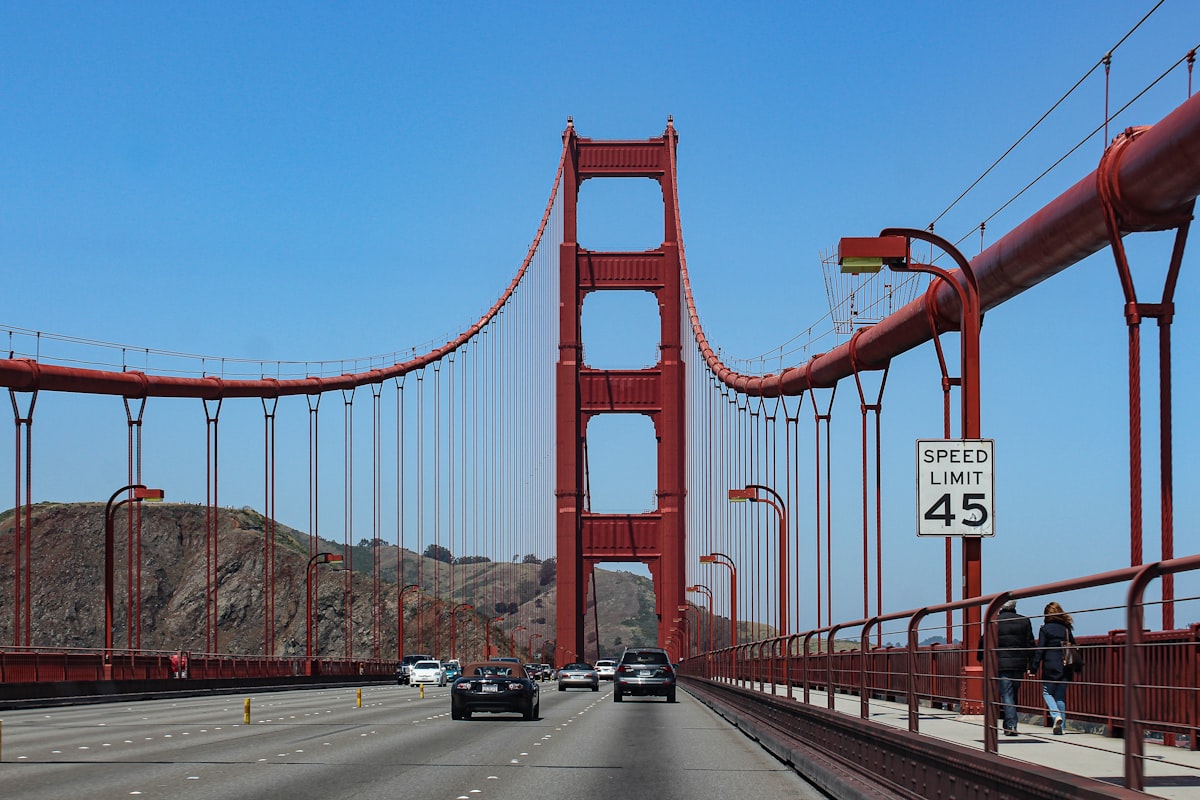
The route is simple: US-101 North out of the city, across the Golden Gate Bridge, through Marin County, and into Sonoma County. There’s no navigating required — you’re on the same highway almost the entire way.
The halfway point is Novato, about 27 miles from both ends. If you’re timing a bathroom break or a coffee stop, that’s the natural spot to make it. From Novato, it’s another 20–25 minutes into Petaluma, and from there Santa Rosa is a straight shot up 101, maybe 20 minutes more depending on where in the city you’re headed.
The stretch between Petaluma and Santa Rosa is where the drive stops feeling like a Bay Area freeway and starts feeling like wine country — the hills open up, the vineyards start showing up on both sides of the road, and the traffic thins out noticeably once you’re north of the 116 junction.
When to Leave
Traffic is the entire variable here. The drive itself doesn’t change; how long you spend sitting in it does.
Golden Gate Bridge and 101 through Marin get genuinely congested on weekday mornings until about 9:30, and again in the evening from roughly 4 to 6:30 as commuters head the opposite direction, back into the city. A Saturday or Sunday departure after 9am avoids nearly all of it. If you’re going on a weekday, leaving before 7am or after 9:30am makes a real difference — the middle of that window can turn a one-hour drive into two.
Coming home, the same logic runs in reverse: leave Santa Rosa before 3:30pm or after 7pm on a weekday, and you’ll skip the worst of the southbound crawl back into the city.
Best Time of Year to Make This Drive
The drive itself doesn’t change much by season — 101 is 101 year-round — but what you find at the other end does.
Late summer and early fall put you in the middle of Sonoma’s harvest season, when crush is underway and some tasting rooms open up cellar tours or vineyard walks they don’t offer the rest of the year. It’s also the busiest stretch, so a weekday trip and an early departure matter more in September and October than at any other time.
Late spring is the quieter alternative — the hills are still green from winter rain, tasting rooms are noticeably less crowded, and you can often get a same-week reservation at places that book out weeks ahead by August. Winter works too, especially if the appeal of the day is more about a quiet tasting room and a fireplace than an outdoor picnic, though a handful of smaller producers do trim their open hours between January and March.
If your schedule is flexible, aim for a weekday any time between May and June, or October after the first weekend rush of harvest tourists has passed.
Two Petaluma Wineries Worth the Detour
Petaluma sits almost exactly on your route, which makes it an easy place to build in a stop without adding real time to the trip.
Adobe Road Winery is right off 101 and pours a lineup heavy on Cabernet Sauvignon and other Bordeaux varietals, with a tasting room that doesn’t require you to detour far from the highway to reach.
A few minutes further out, McEvoy Ranch is worth the extra turns if you have any flexibility in your morning. It’s a working olive oil estate as much as a winery, with rolling hills and a tasting experience that pairs wine with the ranch’s own olive oil — a genuinely different stop than anything you’ll find further north, and a good way to stretch your legs before the rest of the drive.
Either one works as a first stop if you’re leaving the city early enough to make a morning tasting before continuing north. Neither will add more than fifteen minutes to your total drive time.
Not sure which wineries fit your day? Try the Wine Concierge tool — tell it what you’re after and it’ll match you to tasting rooms that fit.
Once You’re in Santa Rosa
Santa Rosa is Sonoma County’s largest city, and it works as a hub rather than a single destination — historic Railroad Square downtown, the Sonoma County Fairgrounds for events and markets, and a wide ring of tasting rooms in every direction, many of them inside city limits rather than out on some remote country road.
St. Francis Winery & Vineyards is one of the area’s more polished stops, known for its Sonoma Valley Cabernet and a hilltop tasting room with views back across the valley — a good choice if you want a sit-down tasting rather than a quick pour at the bar.
Paradise Ridge Winery leans into its setting more than most — a sculpture garden winds through the estate, and the views from the tasting terrace stretch across the Russian River Valley. It’s a strong pick if part of the appeal of the day is simply being somewhere beautiful, not just tasting wine.
If Pinot Noir and cool-climate Chardonnay are what brought you north in the first place, Balletto Vineyards farms its own Russian River Valley fruit and tends to feel more relaxed and low-key than the estates built around a view.
None of these require booking weeks out the way some of the more allocation-driven Napa producers do — Sonoma’s tasting rooms are generally more walk-in friendly, though calling ahead on a weekend is still smart.
Skip the Drive Entirely: The Ferry-and-Train Route
If you’d rather not drive, or you want to have a glass of wine without worrying about who’s driving home, there’s a genuine car-free option: take the Golden Gate Ferry from the San Francisco Ferry Building to Larkspur, then connect to the SMART train, which runs north through Marin into Santa Rosa.
It takes longer than driving — figure closer to two and a half to three hours door to door once you account for the ferry crossing, the connection, and the train itself — but it removes the traffic variable completely, and the ferry ride across the bay is a genuinely nice start to the day rather than dead time. Once you’re off the train in downtown Santa Rosa, several tasting rooms are a short rideshare away rather than requiring a rental car.
This route makes the most sense if you’re not trying to hit multiple wineries scattered across the county — pick one or two that are reasonably close to downtown Santa Rosa, and build the day around not needing a car at all.
Building Your Day
The mistake most first-time day-trippers make is scheduling too much. If you’re driving up and back in the same day, the honest math looks like this: an hour up, an hour back, and realistically six or seven hours in between once you account for a lunch stop and not rushing your tastings.
That’s enough time for two wineries done properly, or three if you keep each visit tight and skip the extended library tasting. It is not enough time for five. Pick a starting point — Petaluma on the way up, or straight through to Santa Rosa — and build outward from there rather than trying to cover the whole map in a single afternoon. The same two-winery-per-morning pacing that works for a full weekend applies just as well to a single day — it’s the number of wineries that wrecks a day trip, not the drive.
Ready to map out the day? Build a Custom Itinerary and we’ll help you sequence your stops so you’re not backtracking across the county.
Frequently Asked Questions
How far is Santa Rosa from San Francisco?
Santa Rosa is about 55 miles from San Francisco, following US-101 North. The drive takes roughly an hour with no traffic, though realistically closer to 75–90 minutes once normal Bay Area congestion is factored in.
Is Santa Rosa a good day trip from San Francisco?
Yes — the drive is short enough to leave in the morning and return the same evening without feeling rushed, as long as you keep your winery list to two or three stops rather than trying to see everything in a single day.
Can I get from San Francisco to Santa Rosa without a car?
Yes. The Golden Gate Ferry to Larkspur connects to the SMART train, which runs directly into downtown Santa Rosa. It takes longer than driving — closer to two and a half to three hours — but avoids traffic entirely.
What’s a good first stop on the drive to Santa Rosa?
Petaluma sits almost exactly on the route and adds very little time to the trip. Adobe Road Winery and McEvoy Ranch are both easy detours right off the highway before you continue north.
Do Santa Rosa wineries require reservations?
Most don’t require a reservation for a standard tasting, especially on weekdays, though calling ahead is a good habit on weekends and during harvest season when smaller tasting rooms can fill up.
What’s the best time of year for this day trip?
Late spring (May–June) offers green hills and thinner crowds. Harvest season (September–October) is the most eventful but also the busiest — a weekday visit is worth the trade-off if your schedule allows it.
Ready to plan the rest of your day? Browse Sonoma County wineries by location, hours, and reservation policy to build a route that actually works.