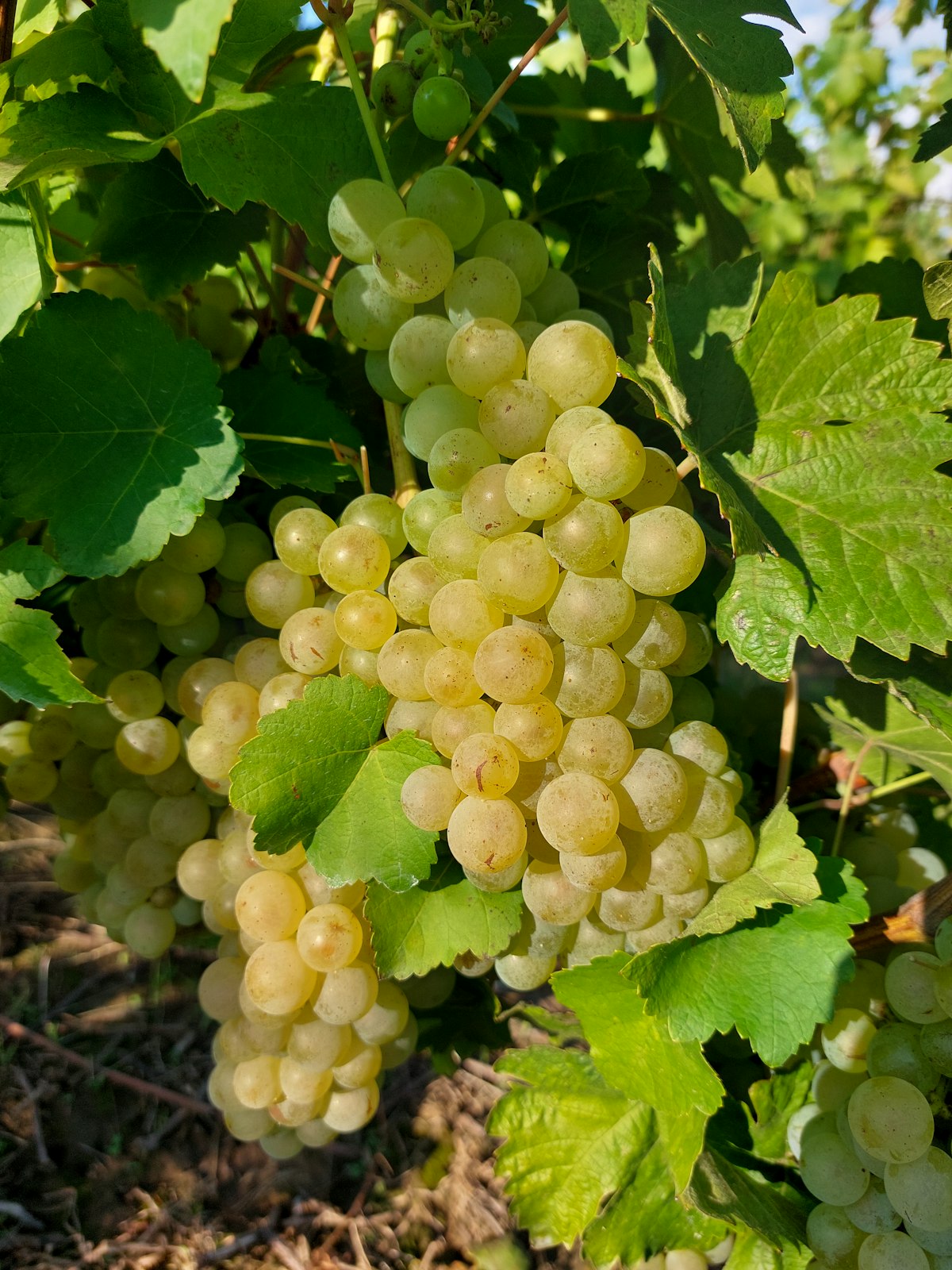
In 1988, California grew more acres of Chenin Blanc than the entire Loire Valley — the grape’s own French birthplace. Sonoma County never got the memo. Even at Chenin’s high-water mark here, in the early 1980s, it trailed Chardonnay, French Colombard, and Sauvignon Blanc in total planted acres, and today it survives in only a handful of scattered blocks, kept alive mostly out of stubbornness.
That makes it one of the strangest wines you can order in wine country: a grape that helped build the California wine industry, all but erased from the county that should have loved it most.
What Chenin Blanc Actually Is
Chenin Blanc is a white grape from France’s Loire Valley, and depending on who’s making it, it can be bone-dry, off-dry, sweet, or sparkling — there’s no single “style” the way there is with, say, Sauvignon Blanc. Loire producers run the full range, from the searingly dry Savennières to the honeyed dessert wines of Bonnezeaux. In South Africa, where it’s the most widely planted grape in the country, it goes by a different name entirely: Steen.
It’s really a member of the broader dry white wine family that does well in Sonoma’s climate — Chenin just happens to be the one nobody here grows anymore.
The grape’s calling card is acidity. It holds onto bright, structured acid even when it’s grown somewhere warm, which is exactly why a small but committed group of California winemakers won’t let it go.
California’s Chenin Blanc Boom and Bust
California once had more Chenin Blanc planted than anywhere outside France. In 1971 the state had roughly 2,903 acres; by 1988, at the height of its popularity, that number had ballooned to 36,145 acres statewide. Most of it, though, wasn’t destined for anything special — it was Central Valley fruit, cropped at high yields and funneled into jug wine sold as “California Chablis” or “California Champagne,” or blended with French Colombard purely for acid.
That bulk-wine reputation is exactly what killed it. As Chardonnay’s popularity exploded through the 1980s and ’90s, growers ripped out Chenin Blanc to replant the grape everyone actually wanted. According to the California Department of Food and Agriculture, statewide plantings fell from 21,410 acres in 1998 to just 4,790 by 2017. What’s left today — a little over 4,700 acres — is concentrated in Clarksburg, Mendocino, and Napa Valley, not Sonoma.
The grape has been in the state a long time. Cuttings likely arrived with Agoston Haraszthy’s mid-1850s plant-collecting expeditions, and the oldest documented planting still producing fruit — at Chalone Vineyards, high in Monterey County’s Gavilan Mountains — dates to 1919. UC Davis registered its first Chenin Blanc clone off a campus vineyard in the 1950s, right around the time Charles Krug’s popular Napa interpretation was helping turn it into a household varietal. None of that early history happened in Sonoma. By the time Chenin Blanc was a household name, the county was already committed to other grapes.
Why Sonoma Never Had Much to Begin With
Sonoma’s relationship with Chenin Blanc is a little different from the rest of the state’s — it’s not just that the county lost its Chenin, it barely had any to lose. The 1983 Sonoma County Agricultural Crop Report put Chenin Blanc at 3,257 planted acres, well behind Chardonnay’s 13,136, French Colombard’s 5,043, and Sauvignon Blanc’s 3,633, and only just ahead of White Riesling’s 2,290.
Sonoma did have its moment with the grape, briefly. Kenwood Vineyards, Alexander Valley Vineyards, and Hacienda Cellars all built reputations on dry Chenin Blanc in the 1970s and ’80s — Hacienda even ran full-page ads pitching its Chenin as a crisper alternative to what it called “blah Chardonnay.” The irony is hard to miss: the same grape that Chenin was being pitched against is the one that eventually pushed it out of the ground almost everywhere. If you want to understand exactly what Chenin Blanc was up against, our Chalk Hill Chardonnay guide covers the other side of that story — the AVA and the varietal that won.
Curious what else Sonoma has tucked away? Browse Sonoma’s wine country discovery platform and filter by varietal to find the tasting rooms still pouring the wines everyone else gave up on.
The Sonoma Wineries Still Making It
A handful of producers have decided Chenin Blanc is worth the trouble, and their reasons for sticking with it say a lot about where the grape’s future actually lies.
Leo Steen Wines, in downtown Healdsburg, is the closest thing Sonoma has to a Chenin Blanc specialist. Danish-born winemaker Leo Hansen founded the label in 2004 after growing frustrated that California wasn’t making enough food-friendly white wine. His middle name happens to be Steen — the South African word for Chenin Blanc — and the coincidence became the whole point of the winery. His first vintage, in 2006, came from a Chenin Blanc block planted in 1981 in Dry Creek Valley, one of the last of its kind in the county. He still makes fewer than 1,000 cases a year, all bone-dry, all single-vineyard.
Pangloss Cellars, right on the Sonoma Plaza, takes Chenin in a different direction entirely: a sparkling wine made in the traditional méthode with fruit from Two Creeks Farm in Kenwood. It’s an unusual enough pour that it tends to become the thing people remember from their tasting.
Pax Wines, in Sebastopol’s Barlow marketplace, is worth including for an honest reason rather than a romantic one — winemaker Pax Mahle, better known for Syrah, sources his Chenin Blanc from old vines in Mendocino County and Amador County, not from Sonoma dirt. The tasting room is here; the grapes generally aren’t. It’s a useful reminder that “Sonoma Chenin Blanc” often means Chenin poured in Sonoma, not necessarily grown here.
DuMol, in Windsor, is the one name on this list actually betting on Chenin’s future rather than just preserving its past. The winery farms a small block at its MacIntyre Estate Vineyard on the Sonoma Coast and recently planted several hundred more Chenin Blanc vines at its Hoppe-Kelly Vineyard site in the Russian River Valley — a genuine expansion, not a rescue project.
A few more names worth asking about at the tasting counter: Saini Vineyards in Dry Creek Valley, whose fourth-generation farming family keeps a small planting alongside their better-known old-vine Zinfandel, with tastings by appointment Thursday through Sunday; Alexander Valley Vineyards, one of the county’s historic Chenin producers, now built around its flagship Cabernet program; Matanzas Creek Winery in Bennett Valley; and Aperture Cellars in Healdsburg, where winemaker Jesse Katz has been turning out a small-lot Chenin Blanc in recent vintages. None of these wineries built their reputation on Chenin Blanc — which is exactly why it’s worth asking for it by name when you visit, rather than assuming it’ll be sitting out on the standard flight.
Most of these pours are appointment-only or limited to a handful of cases a year, so calling ahead matters more here than it does for a winery’s flagship Cabernet or Pinot Noir. A tasting room that’s out of its Chenin Blanc for the vintage isn’t unusual — it’s often the first wine to sell through the mailing list before it ever reaches a public pour.
What It Tastes Like — and How to Taste It
Sonoma Chenin Blanc tends to land somewhere between green apple, pear, and quince, with a bracing acidity that keeps all of it in check. Depending on the winemaker’s choices, you’ll also pick up a waxy or honeyed texture — sometimes from extended lees contact, sometimes just from the grape itself — that gives the wine more weight than its pale color suggests. Versions made from old vines, especially the Dry Creek Valley and Mendocino fruit several of these wineries rely on, tend to lean mineral and citrusy rather than tropical.
The range you’ll find here is genuinely wide for one grape. A bone-dry, single-vineyard bottling like Leo Steen’s sits at one end — taut, high-acid, built to age. Pangloss Cellars’ sparkling version sits at the other, trading still-wine minerality for fine bubbles and a brighter, more immediate style. Neither one tastes like the jug-wine “California Chablis” that gave Chenin Blanc its bad reputation in the first place, which is part of the point these winemakers are trying to make.
Because so few tasting rooms put it on the standard flight, the smart move is simply to ask. Chenin Blanc is frequently the wine held back for people who show real curiosity rather than poured automatically — a small, single-vineyard production run doesn’t always make the printed menu.
What to Eat With It
Chenin Blanc’s acid-and-fruit combination makes it one of the more food-flexible whites you’ll find in Sonoma. It holds its own against roast chicken, cuts cleanly through the richness of goat cheese, and — thanks to that acidity — pairs unusually well with dishes most white wines can’t touch, including spicy Thai or Vietnamese food and raw oysters. If a tasting room offers a food pairing alongside its Chenin, it’s worth taking them up on it; this is a grape built for the table, not just the glass.
Want more finds like this one? Sign up for the Sonoma Wineries newsletter and we’ll send you the next rare-varietal rabbit hole before the six cases sell out.
Frequently Asked Questions
What is Chenin Blanc?
Chenin Blanc is a white grape from France’s Loire Valley, prized for its high natural acidity and versatility — it can be made bone-dry, off-dry, sweet, or sparkling. South Africa calls it Steen, where it’s the most planted grape in the country. In California, it was once more widely planted than Chardonnay.
Is Chenin Blanc a sweet or dry wine?
Both, depending on the winemaker. Loire Valley Chenin ranges from the bone-dry Savennières to the sweet dessert wines of Bonnezeaux. Nearly every Sonoma County producer making it today — Leo Steen Wines and Pax Wines included — ferments it fully dry, leaning on acidity rather than residual sugar.
Why is Chenin Blanc so hard to find in Sonoma County?
Chenin Blanc never had much of a heyday in Sonoma. Even at its 1980s peak it trailed Chardonnay, French Colombard, and Sauvignon Blanc in planted acres. As Chardonnay’s popularity surged, growers pulled out Chenin vines to replant it, leaving only a handful of old blocks standing today.
What does Sonoma Chenin Blanc taste like?
Expect green apple, pear, and quince fruit balanced by bracing acidity, often with a waxy or honeyed texture from lees aging or skin contact. Old-vine examples sourced from Dry Creek Valley and Mendocino fruit tend to lean mineral and citrusy rather than tropical.
What food pairs well with Chenin Blanc?
Chenin Blanc’s acidity and fruit make it one of the more food-flexible whites around — think roast chicken, goat cheese, raw oysters, or anything with real heat, like Thai or Vietnamese dishes. Its brightness cuts through spice and richness alike.
Is Chenin Blanc the same as Steen?
Yes — Steen is simply the South African name for Chenin Blanc, where it’s the country’s most planted grape. The name shows up in Sonoma too: Healdsburg’s Leo Steen Wines is named for winemaker Leo Hansen’s middle name, Steen, which happens to double as the grape’s Afrikaans name.