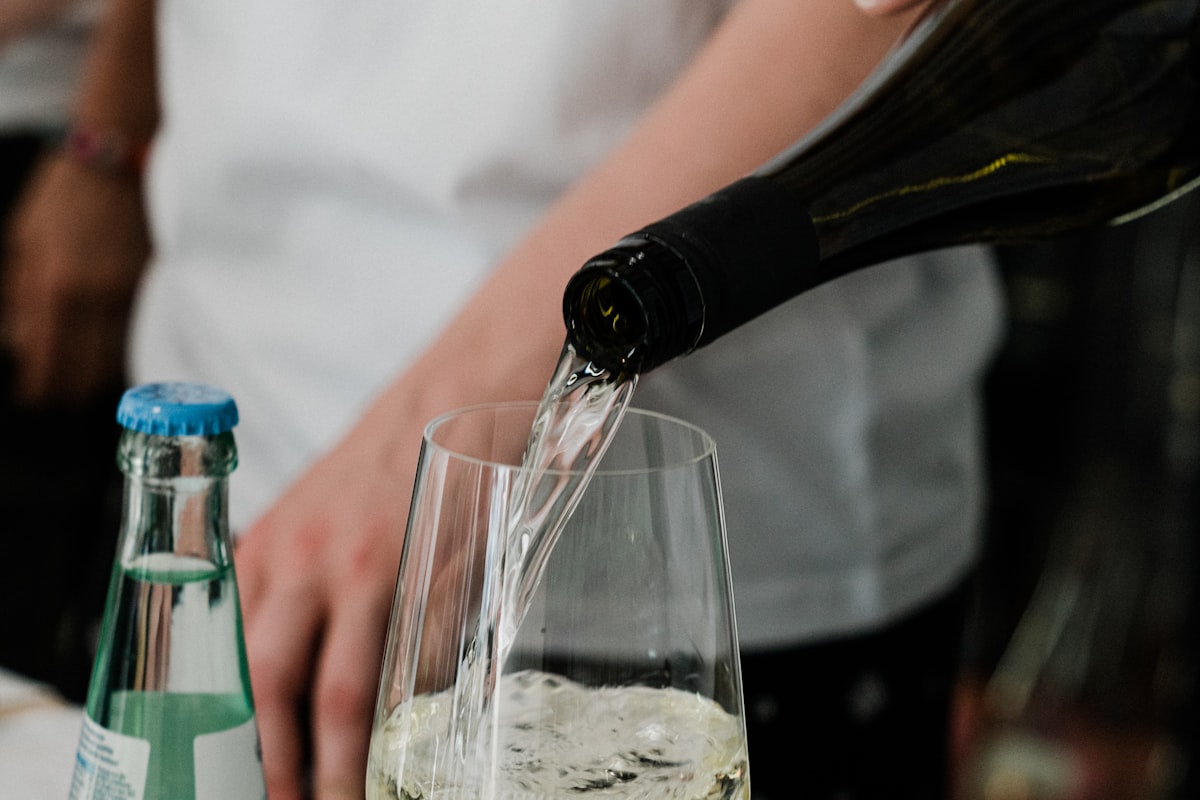
In 1972, Dry Creek Vineyard founder David Stare planted Sauvignon Blanc in Dry Creek Valley against the advice of the vineyard consultants who told him it was the wrong grape for the site. He released Sonoma County’s first Fumé Blanc anyway — a bone-dry, entirely stainless-steel take on the grape, modeled on the Loire Valley. Fifty-some years later, that same unassuming, unoaked style happens to be exactly what you want standing next to a hot pan. Not every celebrated Sonoma white belongs in a sauce, and the ones that do aren’t always the ones you’d expect.
What “Dry” Actually Means (And Why It Matters in a Pan)
A dry white wine is one fermented until nearly all of its natural grape sugar has converted to alcohol, leaving little to no perceptible sweetness behind — typically just a few grams of residual sugar per liter, sometimes less. The opposite is “off-dry” or sweet, where fermentation is stopped early or a touch of sugar is added back to soften the finish.
That distinction matters more once heat gets involved. When you reduce wine on the stove, water boils off and everything left behind — acid, sugar, tannin, oak character — concentrates. A dry wine’s low sugar means it won’t turn a savory pan sauce cloying as it cooks down, which is a real risk with the off-dry Rieslings and Gewürztraminers Sonoma also does beautifully. Those belong in a glass alongside spicy food, not in the skillet underneath it.
The Best Cooking Wine Isn’t the One You’d Save for a Special Occasion
The wine world has repeated some version of “never cook with anything you wouldn’t drink” for decades, and it’s not wrong — it’s just incomplete. Food and wine writer Fiona Beckett puts the honest version of the rule in Decanter: skip actual bottled “cooking wine,” which is often salted and loaded with additives that dull a dish rather than improve it, and skip corked bottles, since taint only gets more obvious with reduction.
Beyond that, the old adage falls apart under testing. Cook’s Illustrated ran the comparison directly — pan sauces and stews made with wines across a range of prices and styles — and the results flipped the conventional wisdom. A four-dollar Sauvignon Blanc performed perfectly well. Meanwhile, several genuinely excellent drinking wines, including an oaky California Chardonnay and a tannic Bordeaux, actively hurt the dishes they went into. Their conclusion: the ideal cooking wine is the unremarkable one. Bright, balanced, and clean beats complex, because complexity gets concentrated and thrown out of proportion by heat, and there’s nowhere for an oaky or tannic edge to hide once it’s reduced by half.
That’s your answer on how much to spend: not much. A straightforward, everyday-tier Sonoma dry white — the kind wineries make by the tank, not the barrel — will outperform your $45 single-vineyard reserve in a pan sauce, and you won’t wince pouring half the bottle in.
Building a shelf of everyday Sonoma whites for the kitchen — or shopping for a cook who already has a wine fridge full of the fancy stuff? Browse gift-ready bottles and accessories →
Which Sonoma Dry Whites Actually Belong in the Pan
Look for “unoaked” or “stainless steel” on the label before you look at the price tag. Those two words tell you a wine skipped the barrel entirely, which is exactly the profile that survives reduction without turning bitter or muddled.
Dry Creek Vineyard’s Fumé Blanc is close to the textbook example: 100% stainless steel fermentation, no oak aging, built around the racy acidity and citrus character of Dry Creek Valley Sauvignon Blanc. It’s the wine Stare built the winery’s reputation on, and it’s still doing the job it was designed for, whether that’s a glass on its own or a splash in a pan.
Russian River Valley delivers the Chardonnay version of the same idea. Iron Horse Vineyards, just outside Sebastopol, ferments its unoaked Chardonnay cold in stainless steel specifically to preserve brightness and minerality rather than the buttery, malolactic style Sonoma also helped make famous. That buttery style is worth seeking out — it’s genuinely one of Sonoma’s signature wines — but save it for the glass. Its whole appeal is the oak and richness that a hot pan will only muddy.
For the full range of dry whites Sonoma produces, and where to taste them, our guide to dry white wine in Sonoma County covers the Chardonnays, Sauvignon Blancs, and lesser-known bottlings worth seeking out on a tasting room visit.
What to Actually Cook With It
Reach for a dry Sonoma white anywhere a recipe calls for deglazing, a cream-based sauce, risotto, or a light protein.
Deglazing. After searing chicken or pork and setting the meat aside, pull the pan off direct heat, pour in a splash of wine, and scrape up the browned bits — the fond — with a wooden spoon before returning it to the heat to reduce. That fond is concentrated flavor that would otherwise get scrubbed down the drain, and a bright, acidic dry white lifts it into a sauce in a couple of minutes.
Risotto. A dry white is close to non-negotiable here. The acid cuts through the butter and starch, keeping a dish that’s otherwise heavy on both from tasting flat.
Cream sauces and mild seafood. This is the one place where reaching slightly upmarket earns its keep. Delicate dishes have nowhere for a wine’s flaws to hide, so a clean, well-made Sauvignon Blanc is worth the extra few dollars over the absolute cheapest bottle on the shelf.
What it’s not for. Red-meat braises and long-simmered tomato sauces want structure and tannin a white wine simply doesn’t have. That’s a dry red’s job — our companion piece on dry red wine in Sonoma County covers that side of the kitchen if you’re planning a braise instead.
A Few Dishes Built for This
If you want a shortlist rather than a set of principles, these are the dishes where a dry Sonoma white earns its place before you’ve even tasted the result:
- Mussels or clams steamed in white wine and garlic. The classic application, and the one that shows off a bright, unoaked Sauvignon Blanc best — the broth is basically the wine, reduced and buttered.
- Chicken or veal piccata. Wine, lemon, and capers deglaze the pan after the cutlets come out, then reduce into the sauce that goes back over them.
- Sole or other flat fish meunière-style. A splash of dry white in the brown butter cuts the richness without fighting the delicate fish.
- Corn or clam chowder. A cup of dry white added before the cream goes in brightens what would otherwise be a one-note, heavy soup.
- Lemon butter sauce for shellfish or roasted vegetables. Reduce wine with shallots first, then mount with butter off the heat — the wine’s acid is what keeps the sauce from tasting purely of fat.
Each of these leans on the same trait: a clean, dry white with real acid and no oak to get in the way. That’s the whole thesis of this article in five dishes.
Keeping an Opened Bottle for the Kitchen
A bottle opened for cooking doesn’t need to be finished that night. Recork it and refrigerate — a dry white holds its usefulness as a cooking ingredient for four or five days even after it’s started to lose its charm as a drinking wine, since a slightly tired, oxidized edge disappears once it’s reduced into a sauce. That’s a reasonable excuse to keep a bottle open in the door of the fridge specifically for weeknight cooking, separate from whatever you’re planning to actually drink.
One more thing worth knowing: cooking doesn’t burn off alcohol as completely or as quickly as most people assume. USDA-based estimates suggest a simmered dish can still retain roughly a quarter of its original alcohol content after a full hour on the stove, and longer for anything baked or added near the end of cooking. Worth factoring in if you’re serving kids, pregnant guests, or anyone avoiding alcohol.
Want more pairing guides like this one, plus a first look at seasonal Sonoma recipes, dropped straight into your inbox? Sign up for the newsletter →
FAQs
What does “dry” mean in a white wine?
A dry wine has little to no residual sugar — usually just a few grams per liter — because fermentation converted nearly all of the grape’s natural sugar into alcohol. The opposite is “off-dry” or sweet, where fermentation stops early or sugar is added back. Sonoma makes both styles, but its Chardonnay and Sauvignon Blanc are almost always fermented fully dry.
How much should I spend on wine for cooking?
Skip anything actually labeled “cooking wine” — it’s salted and loaded with additives that dull flavor rather than add it. Beyond that, spend less than instinct tells you to. Cook’s Illustrated tested this directly and found a cheap, straightforward Sauvignon Blanc outperformed an expensive, oaky Chardonnay in pan sauces, because complexity gets concentrated and thrown off balance by heat.
Is Sonoma wine too good to cook with?
Not the right bottle. Sonoma’s reserve-tier, barrel-fermented Chardonnays are built for sipping, and cooking with one is a genuine waste — the oak turns bitter and muddled once reduced. But Sonoma also produces enormous volumes of everyday, stainless-steel dry whites built exactly for the kitchen. Reaching for one of those isn’t a downgrade; it’s using the right tool.
Does the alcohol actually cook out?
Not entirely, and not quickly. USDA-based estimates suggest a simmered dish can still hold roughly a quarter of its original alcohol content after an hour of cooking, with even more remaining in dishes that are baked or have wine added late. Keep that in mind if you’re cooking for kids, pregnant guests, or anyone avoiding alcohol.
Is it a compliment to call a winery’s wine “good for cooking”?
Depends who you’re saying it to. About a $60 reserve bottle, it lands as an insult — implying the wine isn’t interesting enough to just drink. About a straightforward, well-made stainless Sauvignon Blanc, it’s closer to genuine praise: balanced, honest, doesn’t need to be the star of the table. The wineries proudest of their everyday whites tend to take it exactly that way.