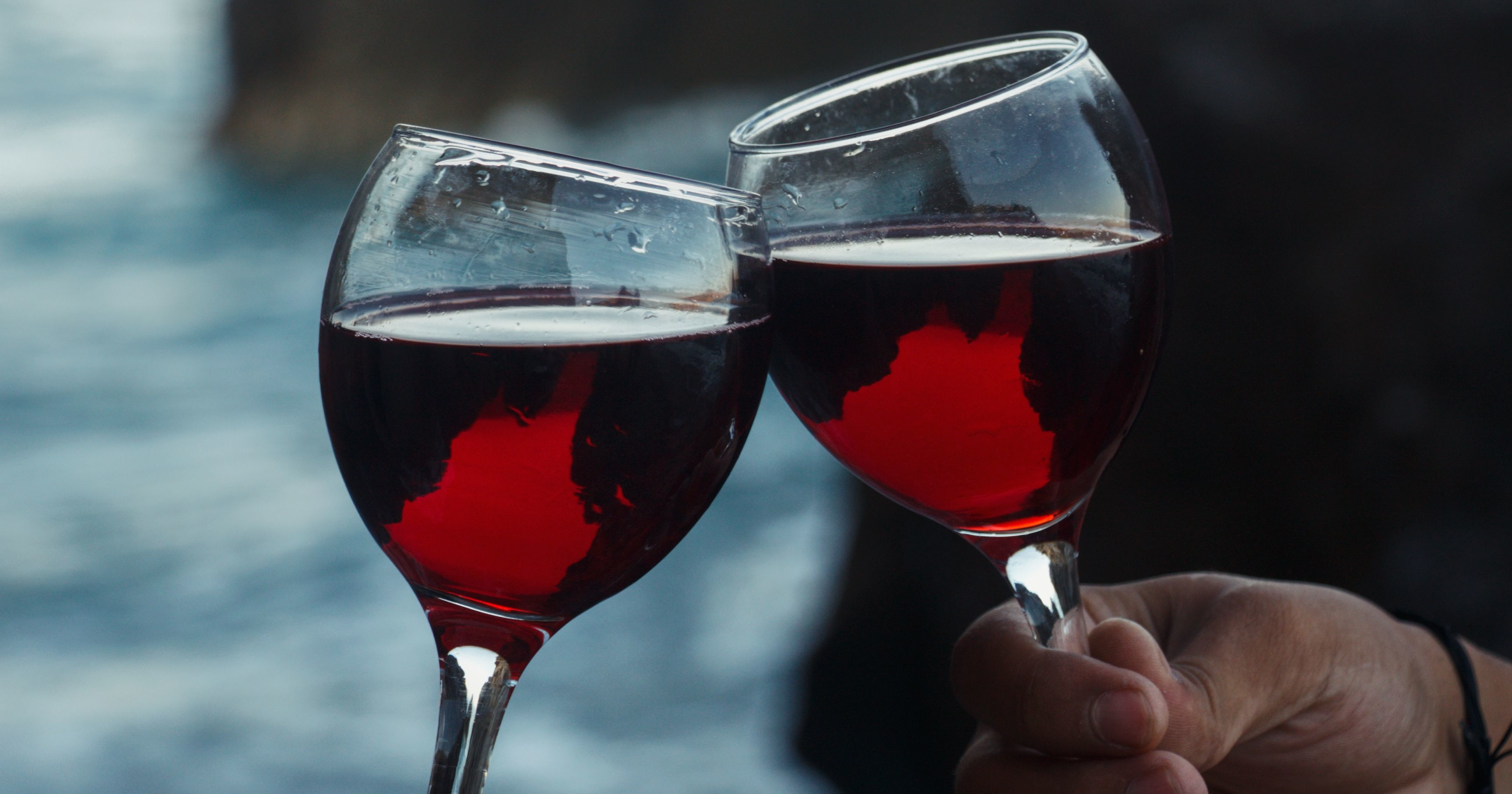
“Dry” is one of the most common words on an American red wine shelf-talker and one of the least regulated. The federal Alcohol and Tobacco Tax and Trade Bureau doesn’t define it, doesn’t test for it, and doesn’t require anyone to disclose the number behind it. In the European Union, the same word is a legal threshold: a still wine can only be called dry at 4 grams per liter of residual sugar or less, stretching to 9 grams if the acidity is high enough to carry it.
So when a Sonoma County tasting room tells you a wine is dry, they’re making an honest claim against a standard that doesn’t legally exist. The good news is that almost every red wine poured in this county genuinely is dry — and the reason so many people insist otherwise has nothing to do with sugar.
What “Dry” Actually Measures
Dryness is the absence of residual sugar, abbreviated RS on a technical sheet and measured in grams per liter.
Grapes arrive at the winery full of glucose and fructose. Yeast eats those sugars and converts them into alcohol and carbon dioxide. If the yeast is allowed to finish the job — to ferment, in the trade’s phrase, to dryness — what’s left is a wine with somewhere between 1 and 2 grams of sugar per liter. Total dryness is chemically impossible; a few unfermentable sugars always survive. But 1 to 2 g/L is functionally nothing.
For scale: a 5-ounce pour of a wine at 2 g/L contains about 0.3 grams of sugar. A single grape contains more.
The thresholds most of the wine world works from:
| Style | Residual sugar |
|---|---|
| Bone dry | Under 2 g/L |
| Dry | Under 4 g/L (EU legal limit) |
| Off-dry | Roughly 10–18 g/L |
| Sweet | 45 g/L and up (EU legal floor) |
Winemakers themselves tend to hold a stricter line than the regulators. Longtime California wine analyst Lisa Van de Water told Wines & Vines that residual sugar rarely appears on red wine technical sheets at all, and that winemakers generally work to a personal rule of thumb of no more than 2 grams per liter. Some lab enologists insist on 1 g/L, because anything above that invites microbial instability — your Cabernet may taste dry to you, but the local Brettanomyces population may disagree.
Nearly every red wine you will taste in Sonoma County sits in that range. The Cabernet, the Zinfandel, the Syrah, the Pinot Noir: dry, dry, dry, dry.
Why a Bone-Dry Red Tastes Sweet
This is the part nobody explains at the bar, and it’s the reason the phrase “dry red wine” gets typed into a search box twenty thousand times a month.
A wine can carry almost no sugar and still register as sweet on your palate. Four things do it:
Ripeness. Sonoma’s warmer inland sites — Alexander Valley, Dry Creek Valley, the Sonoma Valley floor — ripen fruit hard. Riper fruit means more sugar at harvest, which means more alcohol in the finished wine. A Dry Creek Zinfandel at 15.2% alcohol tastes richer, rounder, and sweeter than a Sonoma Coast Pinot Noir at 13.1%, even when both finished at 1.5 g/L.
Alcohol itself. Ethanol has a genuinely sweet taste, and glycerol — a fermentation byproduct that rises with alcohol — adds a viscous, faintly sweet weight. High-alcohol wines read sweeter. This isn’t your imagination.
Oak. New American and French barrels donate vanillin, which is chemically related to vanilla, plus lactones that read as coconut and toasted sugar. A heavily oaked red smells like dessert and your brain fills in the rest before the wine reaches your tongue.
Low acidity. Acid is the counterweight to perceived sweetness. As Decanter notes, a wine with real residual sugar and vibrant acidity can taste perfectly balanced, while oak, fruit character, alcohol level, and even serving temperature can bring a perception of sweetness to a wine with almost no sugar in it at all.
Put those together and you get the great American red wine misunderstanding: people describe jammy, high-alcohol, oak-forward reds as “sweet” and lean, high-acid reds as “dry,” when both are sitting at the same 1.5 grams per liter.
Dry vs. Sweet Red Wine: Where the Line Actually Sits
Genuinely sweet red wine is a real category — it’s just much smaller than most people assume, and you don’t stumble into it by accident.
To get meaningful sugar into a red, a winemaker has to intervene. Stop the fermentation early by chilling or filtering. Fortify it with neutral grape spirit so the alcohol kills the yeast before it finishes, which is how Port is made. Or blend in grape concentrate after the fact, which is how most supermarket “sweet reds” get there.
The dividing line is roughly 10 g/L. Below that, you’re in dry territory, whatever the wine tastes like. Between 10 and 35, off-dry — noticeable to most drinkers but not obviously sugary. Above 45, the EU will let you print “sweet” on the label.
In Sonoma County, sweet reds exist but occupy a narrow shelf: Port-style fortified wines from producers who specialize in them, the occasional late-harvest bottling, and dessert wines poured at the end of a tasting flight. They are made deliberately, sold deliberately, and almost never mistaken for the estate Cabernet. If that’s the category you’re after, we’ve written a separate guide to sweet red wine in Sonoma County.
For everything else on a Sonoma tasting menu, assume dry and you’ll be right.
Tannin Is Not Dryness
Here is the single most useful thing in this article.
When someone says a red wine is “too dry,” roughly nine times in ten they are describing tannin, not sugar.
Tannins are polyphenolic compounds extracted from grape skins, seeds, stems, and oak barrels. They bind to the proteins in your saliva and pull them out of suspension, which is why a young Cabernet Sauvignon leaves your gums feeling stripped and your cheeks faintly furry. That sensation is astringency. It is a tactile experience, not a taste. It has no relationship to sugar content whatsoever.
Two wines from the same tasting room, both fermented to 1.4 g/L:
- A young mountain-fruit Cabernet Sauvignon: grippy, mouth-drying, structural.
- A Russian River Valley Pinot Noir: silky, low in tannin, almost no astringency at all.
Both are equally dry. Only one of them feels dry.
So if you’ve been telling tasting room staff you want “something not so dry” and getting handed sweet wine you didn’t want, try this instead: ask for something lower in tannin. That single word change will get you Pinot Noir, Grenache, Merlot, or a lighter Zinfandel rather than a dessert wine — and it will make the person behind the bar visibly happier to help you.
Sonoma County’s Dry Red Lineup
Sonoma County farms roughly 59,000 acres of vineyard across 19 AVAs, and more than 60 grape varieties grow here. These are the dry reds you’ll actually encounter, ordered by how often they appear on Sonoma tasting menus.
Pinot Noir. The county’s signature red and, at around 13,000 planted acres according to Sonoma County Tourism, its most-planted red variety. Sonoma County Winegrowers put the 2023 crop at 13,024 acres and 55,159 tons, worth just over $214 million. Light in tannin, high in acid, built on red cherry, cranberry, and forest floor. More than 250 wineries on our platform pour it. If you find most reds too grippy, start here — and if you want to go deeper, we have a full guide to Sonoma County Pinot Noir.
Cabernet Sauvignon. Roughly 12,700 acres. Firm tannin, cassis and dark chocolate, a spine that rewards a decade in the cellar. Sonoma’s version runs plusher and more approachable in youth than Napa’s, particularly out of Alexander Valley. More than 200 wineries pour it.
Zinfandel. About 4,760 acres, and the county’s most historically loaded grape — Dry Creek Valley still farms vines planted in the 1880s and 1890s. This is the varietal most often accused of being sweet and least often guilty. Blackberry jam, black pepper, brambly spice, frequently 15% alcohol and bone dry. More than 175 wineries pour it; Seghesio Family Vineyards, Nalle Winery, and Limerick Lane Cellars are three good places to test the sweet-versus-ripe distinction on old-vine fruit.
Syrah. Around 1,380 acres. Savory rather than sweet — black olive, cracked pepper, cured meat, a note of blood orange in cool-climate versions from the Sonoma Coast and Petaluma Gap. Consistently the most underrated red in the county, and Pax Wines has built most of a portfolio on exactly that cool-climate style. More than 125 wineries pour it.
Merlot. Roughly 4,200 acres. Softer tannin than Cabernet, plum and cocoa, genuinely food-friendly. It spent two decades unfashionable for reasons that had nothing to do with the wine. More than 75 wineries pour it.
Petite Sirah. Inky, opaque, enormously tannic — the most astringent thing you’re likely to taste in Sonoma, and completely dry. Often blended into Zinfandel for structure. More than 70 wineries pour it.
Grenache. Pale in color, high in alcohol, full of strawberry and white pepper. People routinely guess it’s sweet based on the aroma and are routinely wrong. More than 65 wineries pour it.
Cabernet Franc. Herbal, graphite-edged, medium in body, with a green-peppercorn lift that makes it unmistakable. More than 50 wineries pour it.
Find the dry red you actually want. Filter more than 470 Sonoma County wineries by the varietal they pour, whether they take walk-ins, and what’s open right now.
Where Sonoma’s Dry Reds Grow
Climate does most of the work here, and Sonoma’s climate is split down the middle by fog.
Cool marine air pushes inland through the Petaluma Wind Gap and the Russian River channel, dropping temperatures by twenty degrees or more on a summer afternoon. That corridor — Russian River Valley, Sonoma Coast, Fort Ross-Seaview, Carneros — is Pinot Noir and Syrah country. Long, slow ripening preserves acidity and keeps alcohol moderate, which is why those wines read as the “driest” on the palate even though they aren’t chemically drier than anything else.
Inland, the fog runs out. Alexander Valley and Knights Valley sit warm and sheltered behind the coastal ridges, and that’s where Cabernet Sauvignon gets ripe enough to build the plush, dark-chocolate texture that distinguishes Sonoma Cabernet from Napa’s firmer style.
Dry Creek Valley splits the difference: warm days, cool nights, and rocky, well-draining soils that stress the vines late in the season and concentrate flavor. It is the reason Dry Creek Zinfandel tastes the way it does.
Then there are the mountain appellations — Moon Mountain District, Rockpile, Pine Mountain-Cloverdale Peak — where thin soils and elevation produce small berries, high skin-to-juice ratios, and the most tannic reds in the county. If you want to understand how much geography changes a glass of wine, our guide to Sonoma’s wine regions maps all 19 AVAs.
How to Tell If a Red Is Dry Before You Commit
The label almost never tells you. Residual sugar isn’t required disclosure in the United States and rarely appears on red wine tech sheets. So:
Ask the number directly. In a tasting room, “what’s the residual sugar on this one?” is a completely normal question. Anyone pouring can usually answer or find out in thirty seconds. If they can’t, that itself is informative.
Read the alcohol. Alcohol by volume is required on the label. A red at 15% or above will almost certainly taste richer and rounder than one at 13%, even though both are dry. If “too sweet” is your complaint, look for lower numbers.
Taste for where the sensation lives. Sweetness registers early, on the tip and middle of your tongue, and lingers. Tannin registers late, along your gums and the inside of your cheeks, and dries rather than coats. Learn to tell those two apart and you’ll never misdiagnose a wine again.
Swallow, then wait ten seconds. If a faint sugary impression is still sitting on your palate, there’s real residual sugar. If your mouth simply feels scrubbed clean, that was tannin.
What to Eat With a Dry Red
Tannin’s whole job at the table is to cut through fat and protein. That’s the pairing principle, and almost everything follows from it.
Big-tannin reds — Cabernet Sauvignon, Petite Sirah, mountain Zinfandel — want fat to soften them. Ribeye, lamb shoulder, aged hard cheese, anything with a char on it. The protein binds the tannin and the wine goes from grippy to plush in a single bite.
Low-tannin reds — Pinot Noir, Grenache, lighter Merlot — pair on flavor rather than structure. Salmon, duck, mushrooms, roast chicken, charcuterie.
One warning that catches people out: sugar on the plate makes a dry wine taste austere. Barbecue sauce, teriyaki glaze, a fruit chutney — all of them will strip the fruit out of a dry Zinfandel and leave you with tannin and acid. If you’re serving something sweet, either go for a fruit-forward, low-tannin red or accept that the wine will taste leaner than it did on its own.
Not sure which Sonoma red suits your palate? Tell our Wine Concierge what you like and it will match you to tasting rooms pouring exactly that.
Frequently Asked Questions
Is all red wine dry?
Almost all of it. The overwhelming majority of red wine made worldwide, and effectively all of it made in Sonoma County outside of dedicated dessert bottlings, ferments to under 4 grams of sugar per liter. Genuinely sweet reds require deliberate intervention — arrested fermentation, fortification, or added grape concentrate — and are sold as a distinct category.
What is the driest red wine?
By residual sugar, most quality reds cluster so tightly between 1 and 2 g/L that the question barely separates them. If you mean which tastes driest, look for high acidity, low alcohol, and firm tannin: a cool-climate Sonoma Coast Syrah, a lean Cabernet Franc, or a young mountain-fruit Cabernet Sauvignon.
Does dry red wine have sugar in it?
A little. Complete dryness is chemically impossible because some grape sugars are unfermentable. A typical dry red holds 1 to 2 grams per liter, which works out to roughly 0.3 grams in a 5-ounce glass — less sugar than a single grape.
Why does my dry red wine taste sweet?
Ripe fruit, high alcohol, and new oak all create a perception of sweetness with no sugar behind it. Ethanol and glycerol taste faintly sweet on their own, oak barrels contribute vanillin, and low acidity removes the counterweight that would otherwise balance the impression. A 15% Dry Creek Zinfandel can taste sweet and still be drier than a wine you’d describe as bone dry.
What’s the least tannic red wine in Sonoma?
Pinot Noir, by a wide margin, followed by Grenache and softer styles of Merlot. If “too dry” has been your complaint about red wine, tannin is almost certainly what you’re reacting to, and asking for a low-tannin red rather than a sweet one will get you what you’re after.
Is dry white wine different from dry red?
The chemistry is identical — dryness means the same residual sugar thresholds regardless of color. The experience differs because whites have essentially no tannin, so acidity does all the structural work. Our guide to dry white wine in Sonoma County covers how that plays out in the glass.