In 2020, a team led by UC Davis enologist Roger Boulton published a study in the journal Molecules showing that single-vineyard Pinot Noir from the Russian River Valley carries a measurable elemental fingerprint — trace metals absorbed from the ground the vines grow in — distinct enough to sort the wines by sub-region without tasting them. Growers here had been arguing the same point for decades on the evidence of their own palates. The instruments agreed.
That study is the reason this appellation talks about itself in a way almost no other California AVA does: not as one region, but as six. Knowing which of the six you’re standing in explains more about what’s in your glass than the words “Russian River Valley” on the label ever will.
What the Russian River Valley Actually Is
The Russian River Valley is a cool-climate appellation in central Sonoma County, established as an American Viticultural Area in 1983 — the 53rd in the United States, and the sixth in Sonoma County. It has been expanded three times since, in 2003, 2005, and 2011, and now covers well over 125,000 acres. Only about 16,000 of those are actually planted to vineyard. The rest is redwood, apple orchard, dairy pasture, small town, and river.
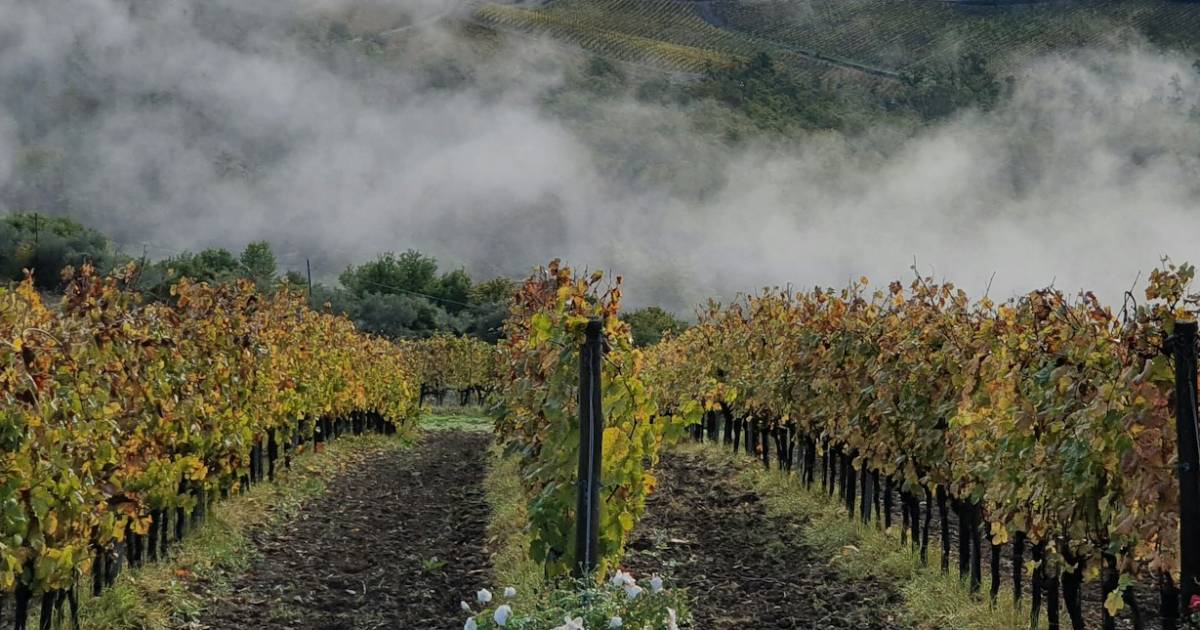
The defining feature is fog. A gap in the coastal hills near Petaluma lets marine air push inland off the Pacific most evenings during the growing season, and it settles into this valley and sits there. Fog rolls in during the late afternoon, blankets the vineyards overnight, and doesn’t burn off until mid-morning the next day. That single mechanic — a long, cold night pressed against a warm afternoon — is why Pinot Noir and Chardonnay ripen here slowly enough to hold their acidity, and why the same grapes planted forty minutes north in Alexander Valley would be a completely different wine.
André Tchelistcheff, the winemaker who shaped much of modern California viticulture, described the valley as “middle-cool” — cold enough to keep the fruit tense, warm enough to actually ripen it. The distinction matters. Truly cold sites produce thin, green wine. The Russian River Valley sits in the narrow band where restraint and ripeness coexist, which is a harder thing to farm than either extreme.
The appellation contains one federally recognized sub-AVA, Green Valley, approved a month after the parent region in 1983. Everything else you’ll hear referred to as a “neighborhood” has no legal standing at all. For broader orientation on how this fits alongside Sonoma’s other growing regions, our guide to Sonoma wine regions maps the whole county.
The Six Neighborhoods
In 2021, the Russian River Valley Winegrowers published a white paper formalizing what growers had long described informally: five distinct neighborhoods within the AVA, with a sixth, the Eastern Hills, added as the association’s understanding developed. These are soil-and-climate distinctions, not legal boundaries, and only Green Valley carries federal recognition.
That has a practical consequence worth stating plainly before you read further. Where a published source names a specific producer as belonging to a neighborhood, this guide follows the source. Where no source does, wineries are grouped by the town they pour in, and the text says so. Nobody has drawn these lines on a map with any authority, and a guide that pretends otherwise is inventing precision it doesn’t have.
Middle Reach
This is the stretch of Westside Road below Healdsburg, and it is the historical heart of Russian River Pinot Noir. Warmer than the neighborhoods to the south, with well-drained gravelly benchland above the river, Middle Reach ripens earliest — it is typically the first part of the valley picked each harvest. The wines lean darker and more structured than the valley average, with the black-cherry weight people usually mean when they call a Pinot “serious.”
The RRVW paper names J. Rochioli Vineyard & Winery among the neighborhood’s defining estates, and it has a fair claim to being the most influential address on the road — four generations of one family, estate Pinot Noir and Chardonnay, plus a Sauvignon Blanc that quietly outclasses its reputation. Appointments are required. Just up the road, Bacigalupi Vineyards has farmed the same ground since 1956, and their fruit went into the 1973 Chateau Montelena Chardonnay that beat the French at the 1976 Judgment of Paris — a piece of wine history that happened on this exact hillside.
Davis Bynum was the first winery to open on Westside Road and produced the region’s first vineyard-designated Pinot Noir more than fifty years ago. The original Bynum property is now home to Thomas George Estates, which pours estate Pinot and Chardonnay in a 10,000-square-foot wine cave — one of the more genuinely memorable tasting settings in the county.
The rest of the road is dense with reasons to stop. Gary Farrell Vineyards & Winery, founded in 1982, has the hilltop view most visitors remember longest. Moshin Vineyards was built by a mathematician-turned-vintner as a four-tier, solar-powered gravity-flow winery. Matrix Winery pours on a shaded veranda over its estate vineyards. Landmark Vineyards, Hop Kiln Estate tastes inside the original 1905 hop kilns, a registered California Historical Landmark from the era when this valley grew hops rather than grapes. Christopher Creek Winery is the rustic, open-daily counterpoint to all the appointment-only estates. Arista Winery sold its Westside Road estate in 2025 and now pours privately by advance appointment. And Williams Selyem Winery, the label that did more than any other to make Russian River Pinot collectible, remains largely a list proposition.
Laguna Ridge
A band of Goldridge sandy loam running through the middle of the valley, cooler and later-ripening than Middle Reach. The soil is the story: fine, well-drained, low-vigor sand that stresses the vines into small berries. Laguna Ridge Pinot tends toward red fruit and perfume rather than black fruit and grip — lifted, aromatic, and lighter on its feet.
The RRVW paper places Joseph Swan Vineyards here, a winery whose first vintage was 1968 and whose tin-shed cellar also produced Ravenswood’s first wines — two foundational Sonoma labels out of one modest building. Dehlinger Winery, founded in 1975 and named by the same paper, is the neighborhood’s cult address: Pinot Noir grown entirely on its own Vine Hill Road vineyard, allocation-list only for most of its history, now opening the working estate to small by-appointment visits.
Green Valley
The coolest, foggiest corner of the appellation, and the only neighborhood that is also a federally recognized AVA. Approved in November 1983 on a petition led by Audrey Sterling of Iron Horse, Green Valley sits in the southwest, closest to the coastal influence, with roughly 3,600 planted acres sitting on Goldridge soil across about 60 percent of its area. It ripens last and holds the most acidity, which is precisely why it became California’s most respected source of sparkling base wine.
Iron Horse Vineyards has farmed here since 1976 and tastes outdoors, looking across the estate toward the hills — three generations on 300 acres, and the sparkling wine most associated with the neighborhood. Dutton-Goldfield Winery came out of a 1998 handshake between grower Steve Dutton and winemaker Dan Goldfield, and remains one of the clearest expressions of what cool-site farming plus restrained winemaking produces. Dutton Estate Winery, run by another branch of the same sixth-generation farming family, is one of the few walk-in-friendly stops in a neighborhood that otherwise runs on reservations.
Marimar Estate is the outlier and worth the detour: a Catalan-style hilltop farmhouse run by Marimar and Cristina Torres of the Spanish Torres family, pouring estate Pinot and Chardonnay alongside Spanish varietals nobody else here grows. Hartford Family Winery, on Martinelli Road in Forestville, makes single-vineyard Pinot, Chardonnay, and old-vine Zinfandel from sites across the cool western edge.
Sebastopol Hills
The southwestern edge, and the coldest ground in the valley outside Green Valley proper. Marine air arrives here first and leaves last. The wines are the most overtly cool-climate in the appellation — high acid, low alcohol, savory and structural rather than plush.
No published source assigns individual producers to this neighborhood, so what follows is grouped by town: these are wineries pouring in and around Sebastopol. Emeritus Vineyards farms only Pinot Noir, all of it dry-farmed, on a former apple orchard called Hallberg Ranch — the largest dry-farmed Pinot Noir estate in Sonoma County, and dry-farming in this climate is a genuinely uncommon commitment. Merry Edwards Winery, founded in 1997 by one of California’s pioneering women winemakers, is as well known for its barrel-aged Sauvignon Blanc as for its Pinot.
Lynmar Estate sits on a hundred acres of vineyard, gardens, and nature preserve and builds its visits around culinary pairings. Paul Hobbs Winery pours reservation-only at the Katherine Lindsay Estate, while the same winemaker’s more casual second label, Crossbarn by Paul Hobbs, tastes in a converted apple processing facility — a reminder that this was apple country long before it was Pinot country.
Santa Rosa Plains
The valley floor east of Sebastopol, flatter, warmer, and more forgiving than the western neighborhoods. Deeper alluvial soils and a bit more afternoon heat produce a rounder, more immediately generous style of Pinot and Chardonnay. This is also the most agriculturally mixed part of the AVA, where vineyards sit alongside what’s left of the row-crop farming the plains were originally cleared for.
Again, these are grouped by town rather than by any published neighborhood assignment. Balletto Vineyards is the clearest illustration of that history — once the largest vegetable farm in Northern California, the family converted to wine grapes after the floods and market shifts of the late 1990s. Benovia Winery, founded in 2005, farms roughly 70 acres across three estate vineyards under winemaker Mike Sullivan. Inman Family Wines is owner-winemaker Kathleen Inman’s regeneratively farmed, entirely solar-powered estate, and her lower-alcohol, food-first style is a deliberate argument against the ripeness arms race of the 2000s.
Eastern Hills
The warmest and least-visited neighborhood, climbing the hills on the valley’s eastern side toward Windsor and the Chalk Hill boundary. More sun, more elevation, and less fog influence than anywhere else in the AVA, which pushes the wines toward riper fruit and firmer structure. It has the fewest tasting rooms of the six by a wide margin.
Martinelli Winery & Vineyards pours in a turn-of-the-century hop barn on River Road in Windsor, from a family with more than 135 years of growing here — placed by town, not by any source-assigned boundary. If the warmer eastern edge of the valley interests you, the appellation immediately next door is covered in our Chalk Hill Chardonnay guide.
Ready to see who’s actually open? Filter Russian River Valley wineries by tasting fee, reservation policy, and hours before you commit to a route.
If You Only Have One Day
Pick one neighborhood. That is the single most useful piece of advice in this guide, and the one most first-time visitors ignore.
The Russian River Valley is not a strip of tasting rooms you can walk. It is a hundred-plus square miles of two-lane roads, and Westside Road in particular is narrow, winding, and slow by design — the drive from a Green Valley winery to a Middle Reach winery can eat forty-five minutes each way even though they’re in the same AVA. Three appointments spread across three neighborhoods becomes a day of driving punctuated by wine.
Three tastings is the realistic ceiling, and two is better if you want lunch. Book the appointment-only estates first, since they set the shape of the day, and leave the walk-in-friendly stops as flexible filler. Our wine weekend planning guide goes deeper on pacing, spacing, and the logistics of a multi-day trip.
If you want the historical spine of the region, run Westside Road: Rochioli or Bacigalupi, then Thomas George or Gary Farrell, then something rustic to finish. If you want the coolest-climate expression, stay in Green Valley and Sebastopol. If you want to understand the contrast the UC Davis study measured, take one Middle Reach appointment and one Green Valley appointment on the same afternoon and taste them against each other — the difference is not subtle, and you will not need an instrument to find it.
Beyond Pinot Noir
Pinot Noir and Chardonnay are roughly four-fifths of the story here, but treating them as the whole story means missing what the valley does when nobody’s watching.
Sparkling wine has the longest history of anything grown here. Korbel Champagne Cellars was founded in Guerneville in 1882 by three Bohemian brothers and is one of California’s oldest continuously operating sparkling houses, still working in méthode champenoise. It is also the most tourist-facing property in the valley, with daily tastings, free cellar and museum tours, gardens, and a delicatessen — a genuinely different proposition from a $75 seated appointment, and a good stop with people who aren’t especially interested in wine. Iron Horse, up in Green Valley, is the other end of the same category.
Old-vine Zinfandel survives in pockets across the valley, mostly on sites planted long before anyone thought this was Pinot country. Joseph Swan and Hartford Family both make it from old plantings, and it is a useful corrective to the idea that cool-climate means delicate.
Sauvignon Blanc, Syrah, and Petite Sirah turn up more than the appellation’s reputation suggests. Merry Edwards built half its following on barrel-aged Sauvignon Blanc, Rochioli makes a well-regarded one, and Christopher Creek and Matrix both pour Petite Sirah and Syrah from warmer sites. For varietal depth on the grape that defines the region, our Pinot Noir in Sonoma County guide covers how it’s grown and made across the county.
Tasting Without the Drive
You can taste a meaningful cross-section of this valley without getting in a car after the first glass, which is worth knowing if your group is splitting driving duty or you simply want a lower-effort afternoon.
Downtown Healdsburg sits at the top of the valley and has become the densest concentration of Russian River tasting rooms anywhere. Hartford Family Winery’s Healdsburg salon pours the same single-vineyard Pinot and Chardonnay as the Forestville winery, steps from the plaza. Siduri Wine Lounge has been making site-driven Pinot since 1994 and runs its downtown room as an actual lounge — cozy seating, a vinyl collection, happy hour — which is a rarer thing in wine country than it should be.
In Sebastopol, Kosta Browne Wines tastes at The Barlow, the former apple cannery turned market district. Kosta Browne spent years as a mailing-list-only label, and the fact that you can now book a reserve flight without an allocation is one of the bigger shifts in access this valley has seen.
The trade-off is real: a town tasting room gives you the wine without the place. You’ll miss the fog line on the hills and the reason the vineyard is planted where it is. For a first visit, at least one appointment out among the vines is worth the driving.
Visiting During Harvest
Interest in this valley spikes from September through November, and for once the seasonal enthusiasm is justified rather than manufactured.
Harvest in the Russian River Valley starts earlier than most of Sonoma County because sparkling base wine is picked first, at low sugar and high acid — often in late August. Pinot Noir for still wine follows through September, with Middle Reach typically ahead of Green Valley by a couple of weeks, and Chardonnay running alongside it. By late October the fruit is mostly in and the cellars are full.
Visiting during crush means crews working, presses running, and the whole property smelling of fermenting fruit. It also means the people who would normally pour for you are busy, so appointment availability tightens, and some estates restrict visits entirely during their picking window. Book earlier than you think you need to, and ask directly whether they’ll be harvesting the week you want to come. Our Sonoma harvest season guide breaks down what happens month by month.
The fog that defines this appellation is also at its most legible in fall. Arrive at nine in the morning in October and you’ll drive into it — the valley floor grey and cold, the ridgelines above it in clear sun. That’s the mechanism the entire region is built on, and it’s the one thing about the Russian River Valley that no bottle can quite explain.
Want the whole day mapped out? Build a Russian River Valley itinerary that accounts for drive times, reservation windows, and where to stop for lunch.
Frequently Asked Questions
What is the Russian River Valley known for?
Pinot Noir and Chardonnay, grown in a cool, fog-influenced climate that lets both ripen slowly while keeping their acidity. The appellation is also California’s most important source of sparkling base wine, particularly from the Green Valley sub-AVA, and it holds pockets of old-vine Zinfandel from before the region turned to Pinot.
How many wineries are in the Russian River Valley?
More than most visitors expect, and the number moves as tasting rooms open, close, and consolidate. The practical answer is that there are far more than you can visit in a weekend — enough that filtering by neighborhood, reservation policy, and open hours is more useful than working from any fixed list.
What are the six neighborhoods of the Russian River Valley?
Middle Reach, Laguna Ridge, Green Valley, Sebastopol Hills, Santa Rosa Plains, and the Eastern Hills. Only Green Valley is a federally recognized AVA; the other five are informal designations established by the Russian River Valley Winegrowers to describe real differences in soil, fog exposure, and ripening time.
Is the Russian River Valley better than Napa for Pinot Noir?
For Pinot Noir specifically, the Russian River Valley has the stronger case — Napa’s climate is warmer and better suited to Cabernet Sauvignon, and its Pinot largely comes from the cooler Carneros end. The two regions are answering different questions rather than competing on the same one.
How many days do you need in the Russian River Valley?
Two days covers it comfortably: one for the Westside Road corridor through Middle Reach, one for the cooler Green Valley and Sebastopol side. A single day works if you commit to one neighborhood and book no more than three tastings. Trying to cross the valley twice in a day turns the trip into a drive.